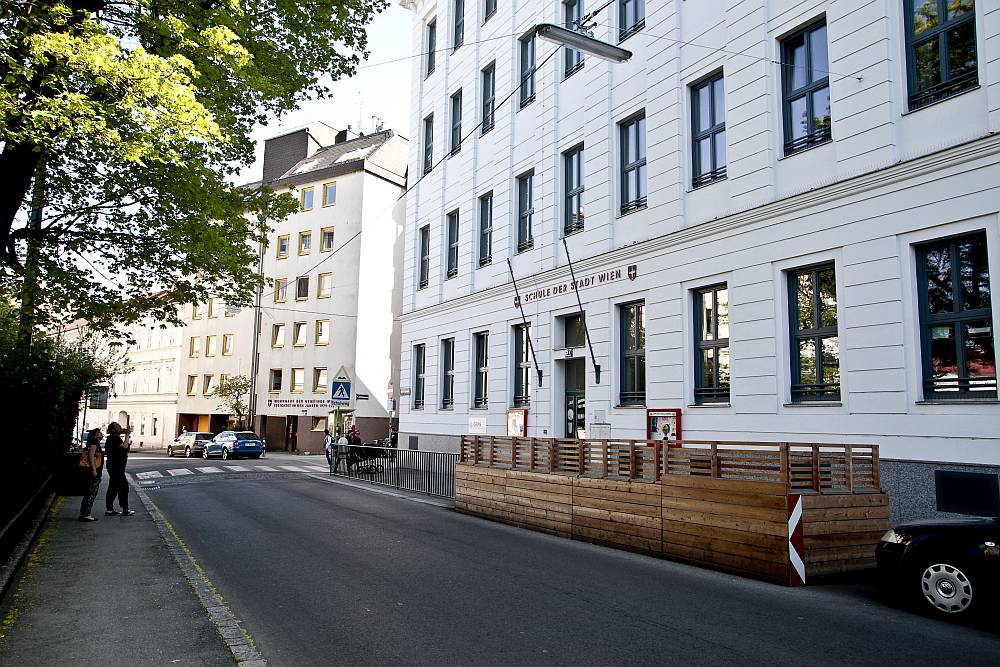
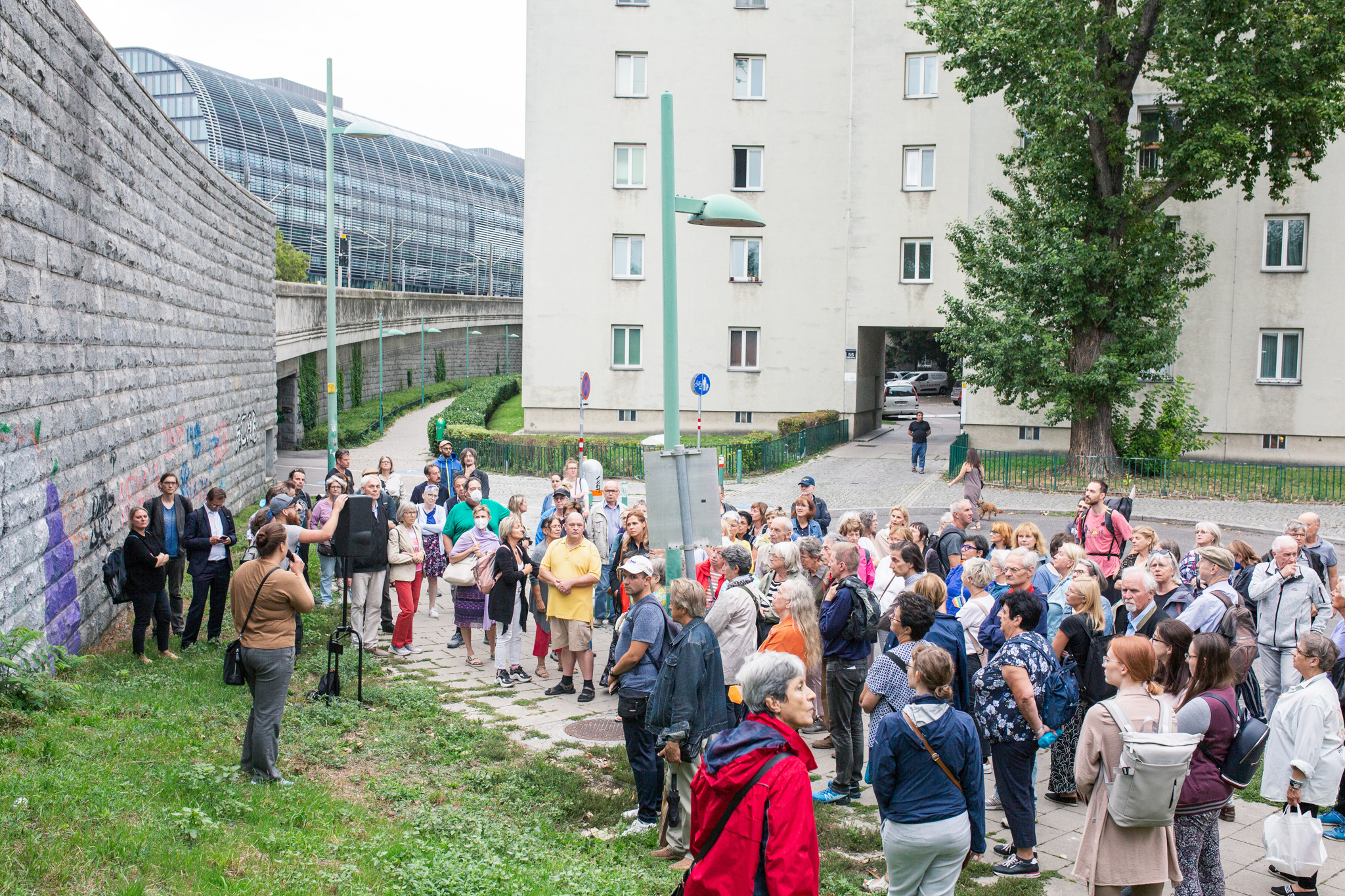
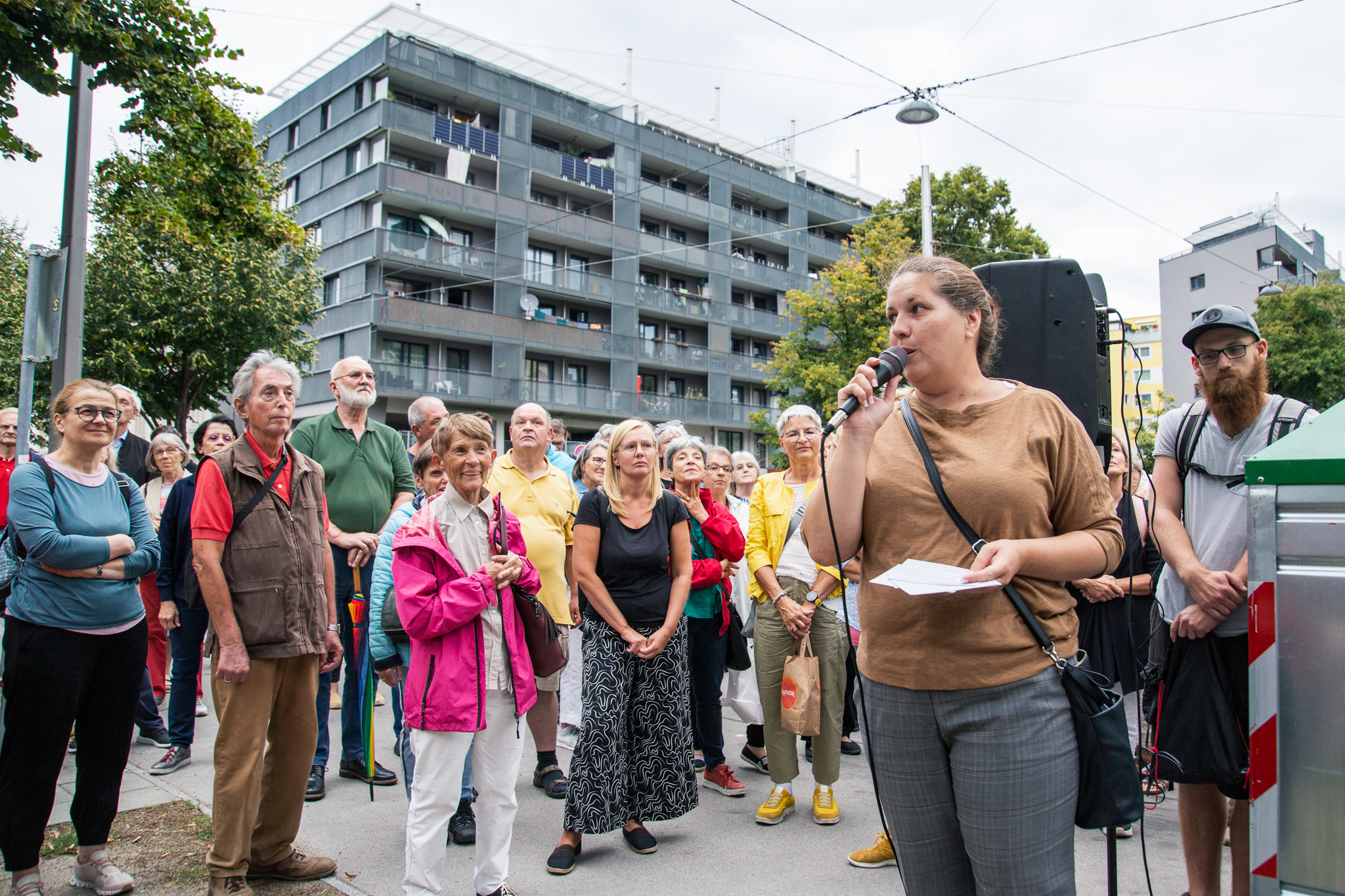
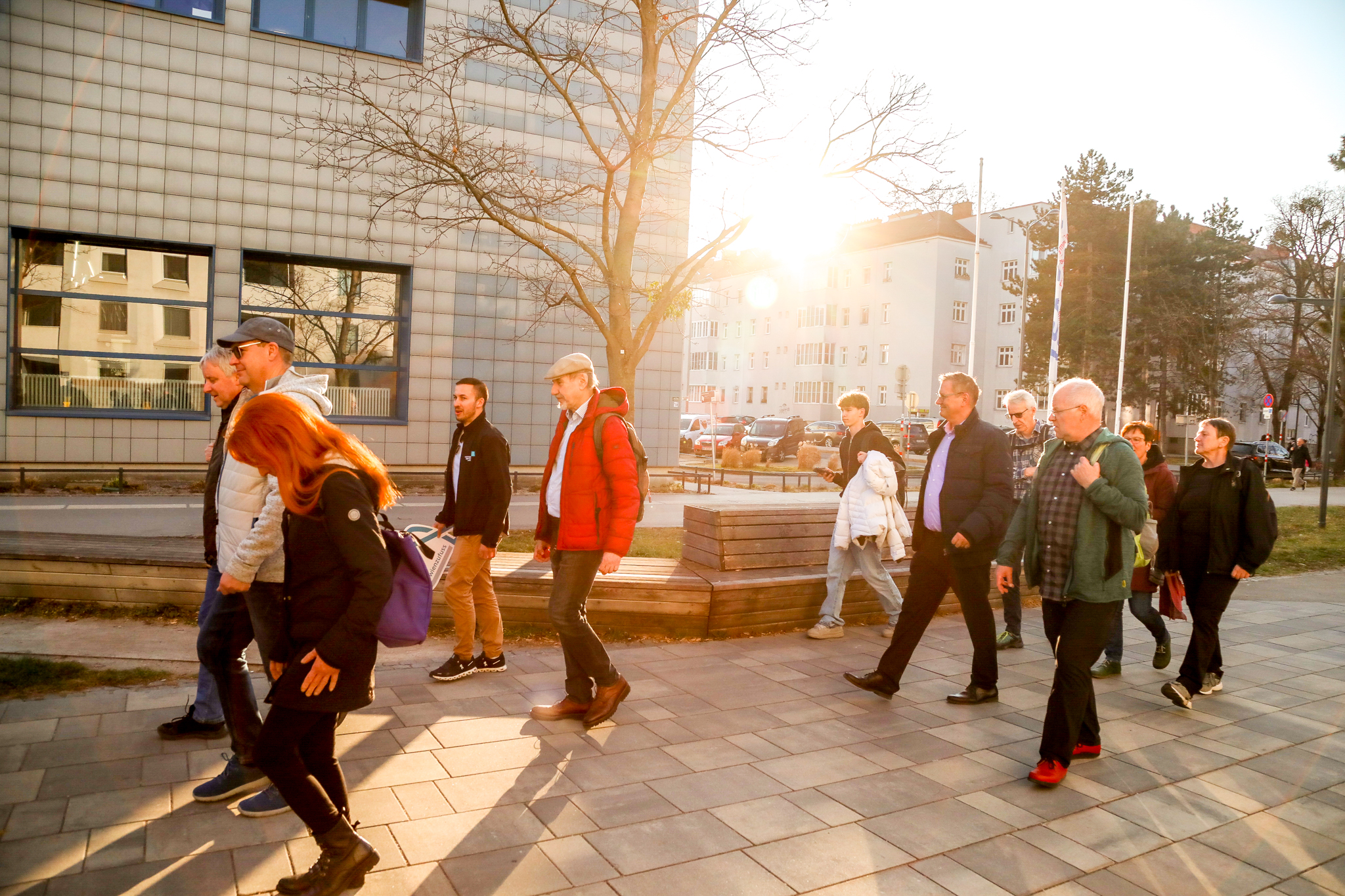
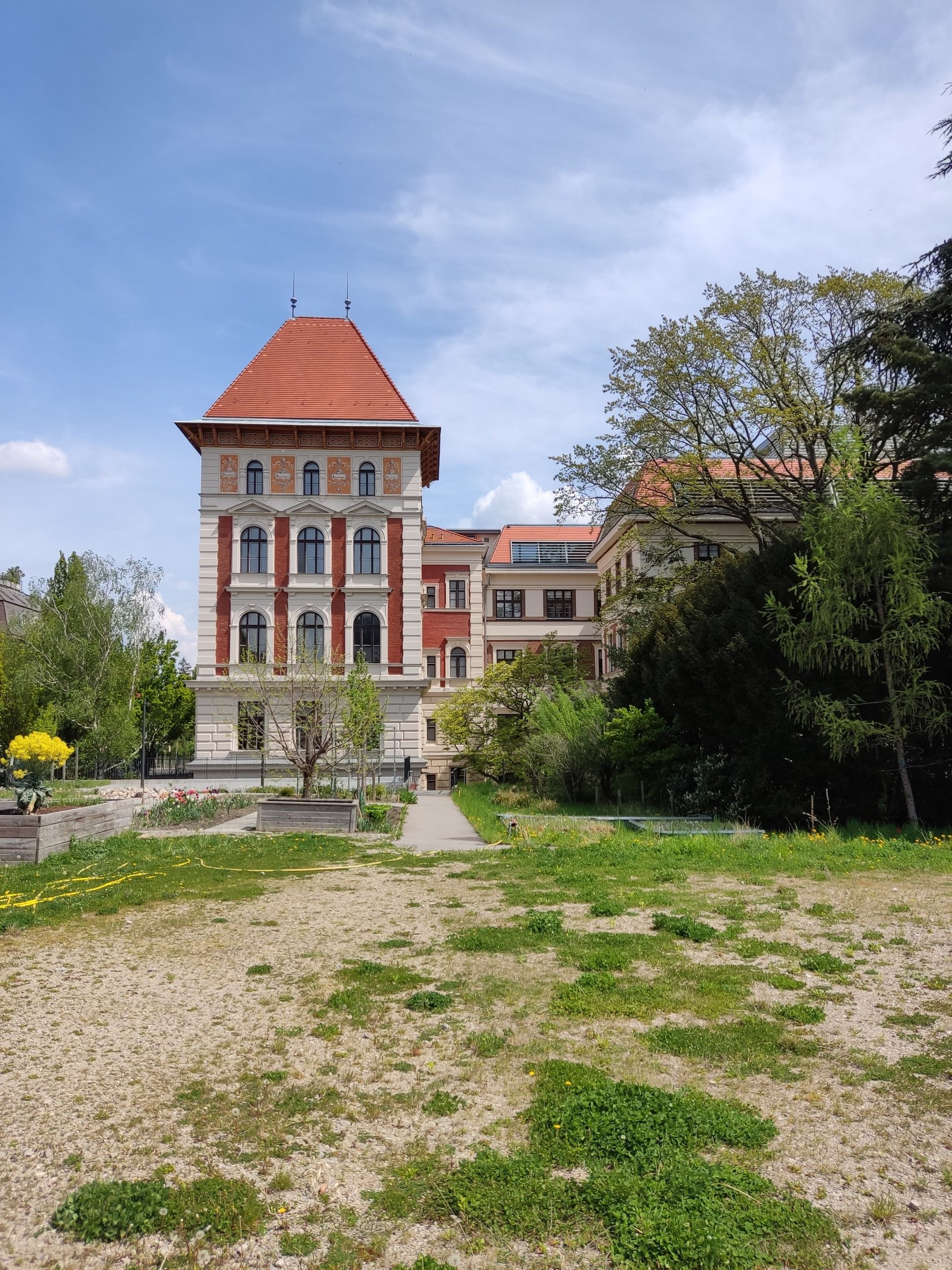
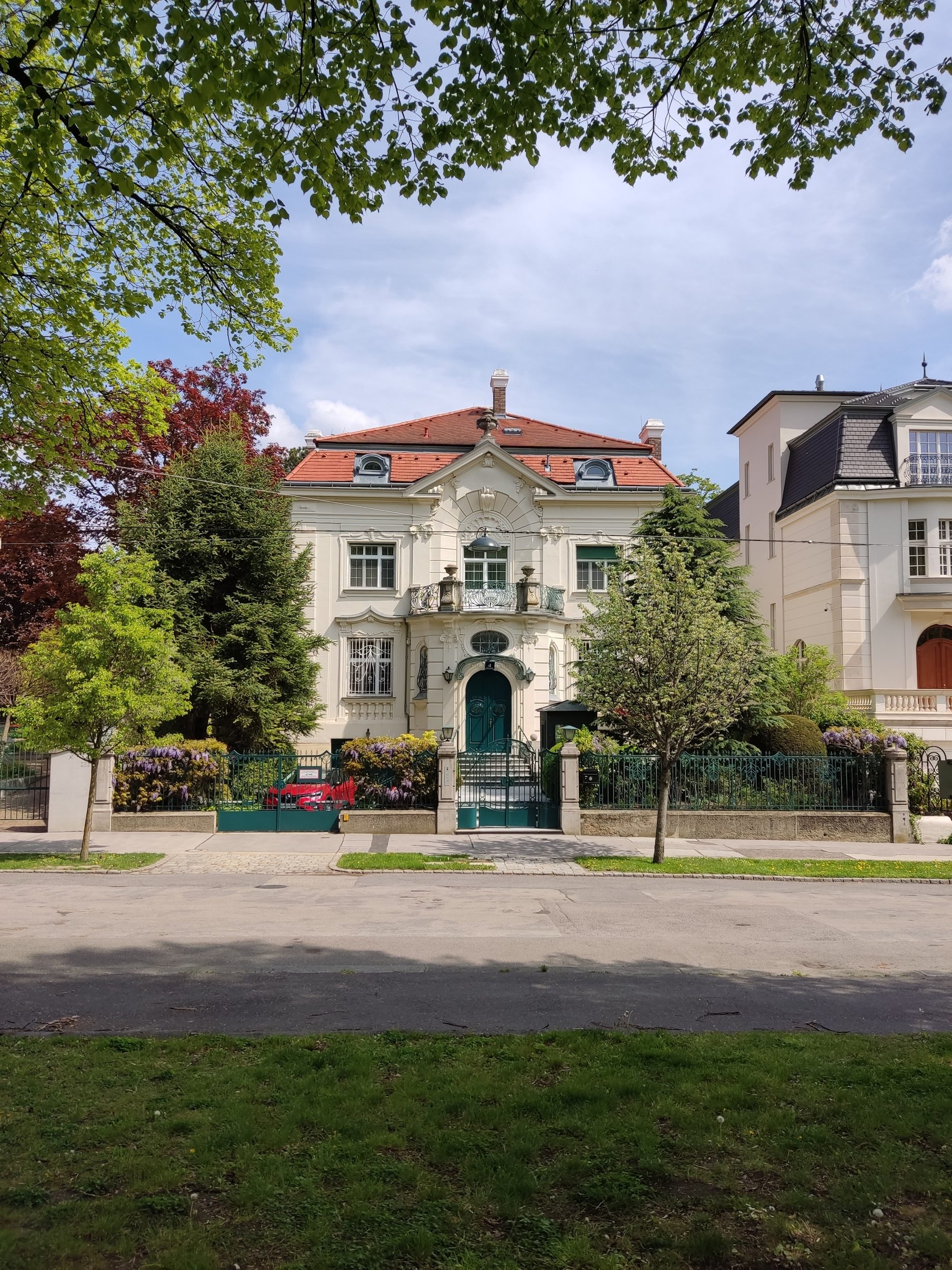
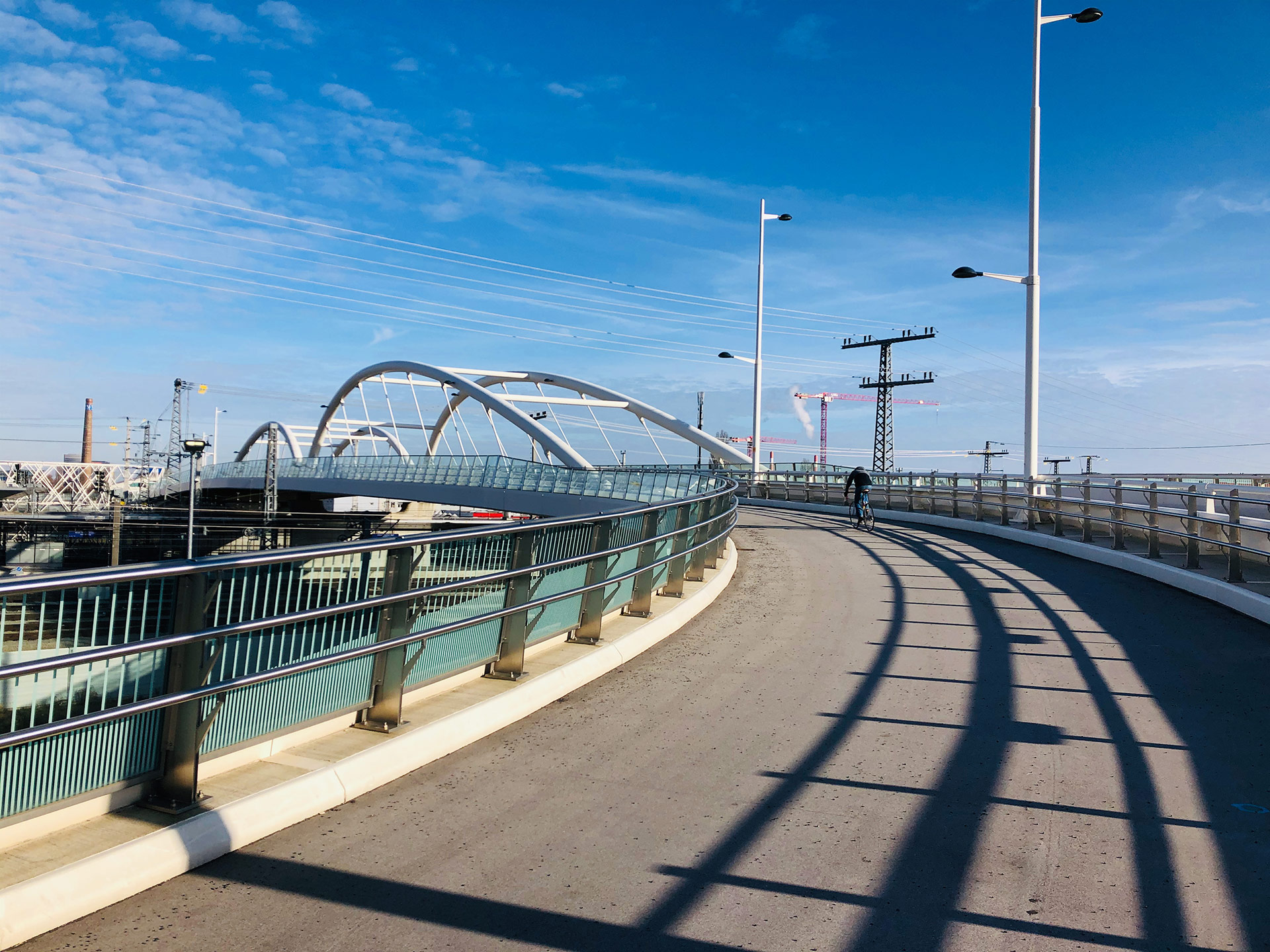
1/ Der Rundgang startet bei der Volksschule Brünner Straße 139, auf der stadteinwärts rechten Seite der Straßenbahnstation Großjedlersdorf. Ein guter Treffpunkt, denn hierher kommt man mit den Straßenbahnlinien 30 und 31 von der Schnellbahn- und U6-Station Floridsdorf – oder von der Schnellbahnstation Brünner Straße. Auch die Autobuslinie 30A (Stammersdorf – Schnellbahnstation Siemensstraße) und 31A (U1-Station Kagraner Platz) sowie die Autobuslinien 32A, 36A und 36B haben ihre Station in der Frauenstiftgasse, gleich neben der Schule.
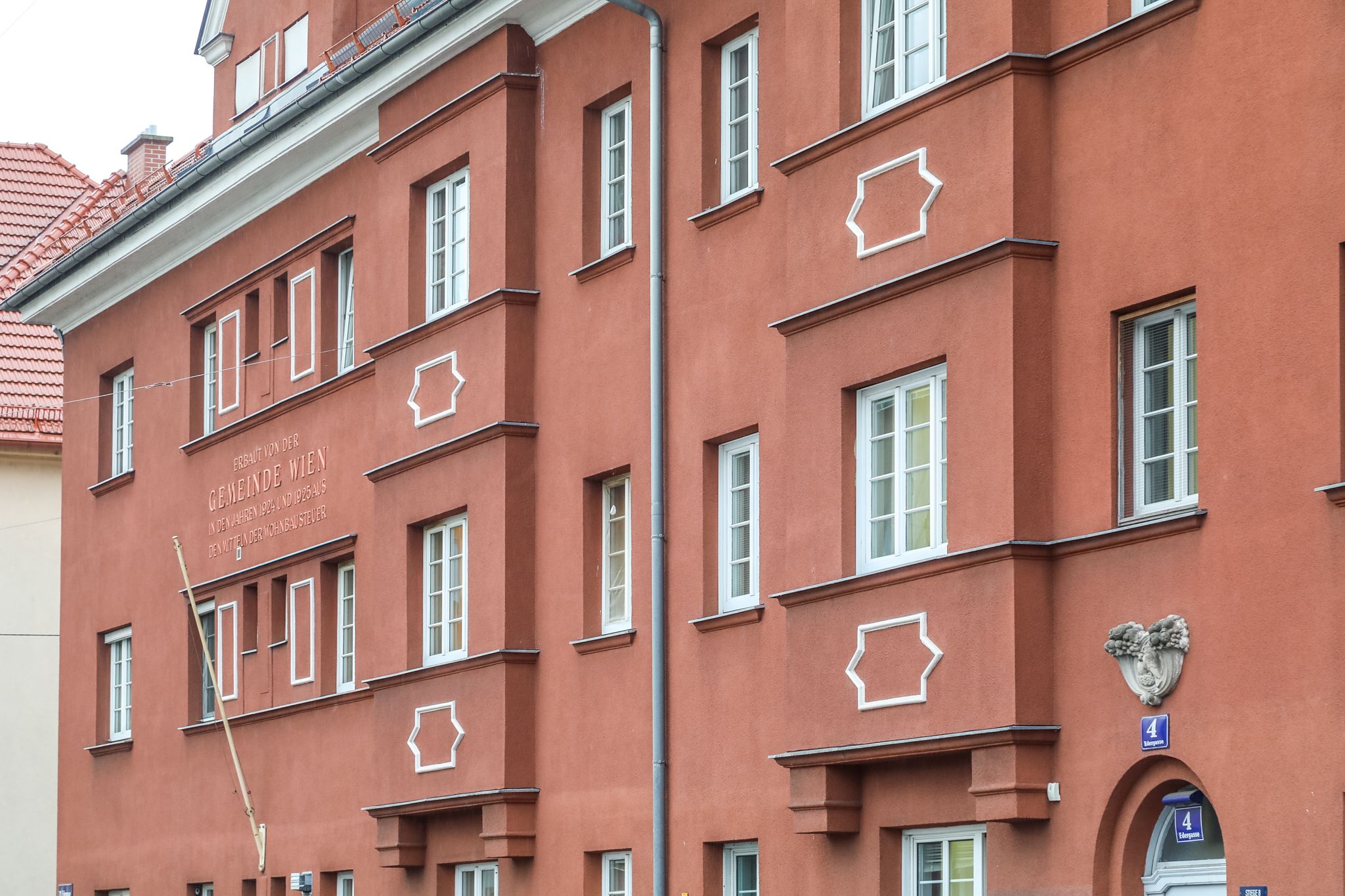
2/ Wir überqueren die Brünner Straße Richtung Osten und biegen gleich stadtauswärts ab. Die erste Station ist der markante rote Gemeindebau gegenüber der Schule, der mit seinen kontrastierenden weißen Fenstern ein wenig an schwedische Sommerhäuser erinnert. Dieser Bau wurde in den Jahren 1924-1925 aus den Mitteln der Wohnbausteuer errichtet. Es ist der erste Teil von insgesamt drei Baublöcken , die in dieser Zeit östlich der Brünner Straße als Gemeindebauten errichtet wurden. Zu dieser Zeit gab es in der Umgebung nur das bäuerliche Großjedlersdorf, vereinzelte gründerzeitliche Eckbebauungen – wie beispielsweise das Eckhaus Brünner Straße 136 / Edergasse – und Felder. Wir biegen nun auch in die Edergasse ein, auf deren linker Seite 1924 zu Baubeginn des Gemeindebaus bis zum Horizont nur Ackerflächen zu sehen waren.
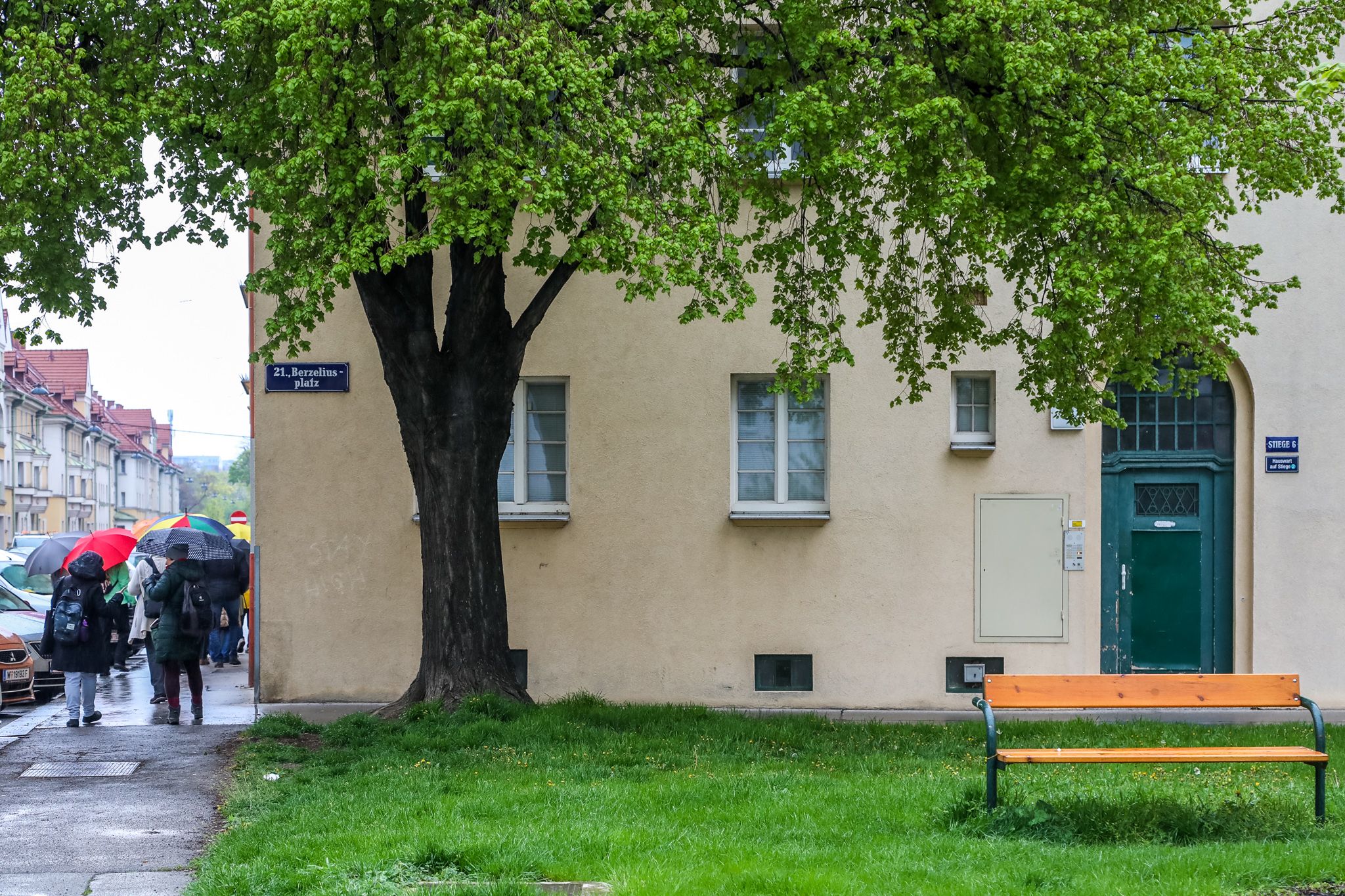
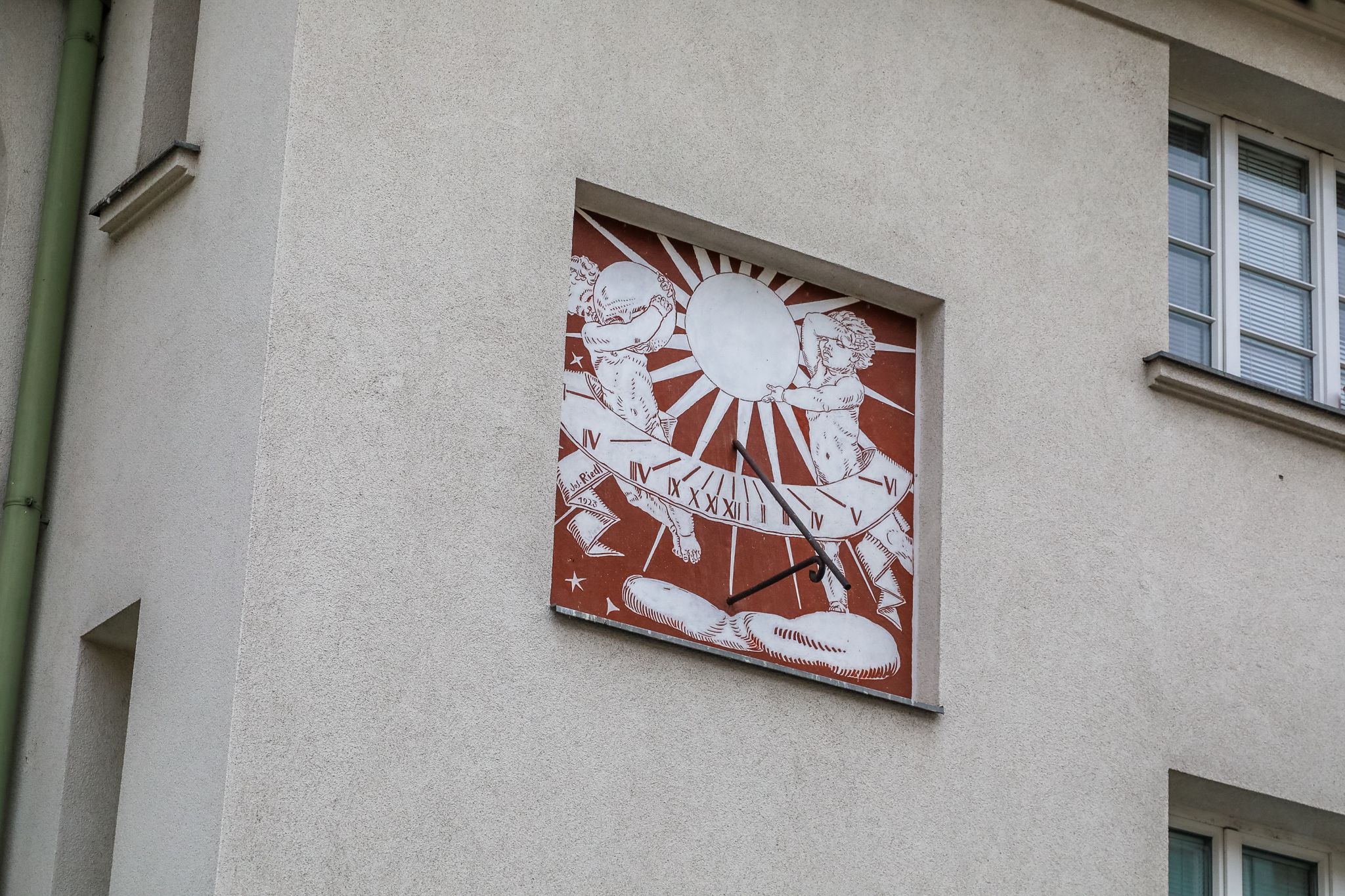
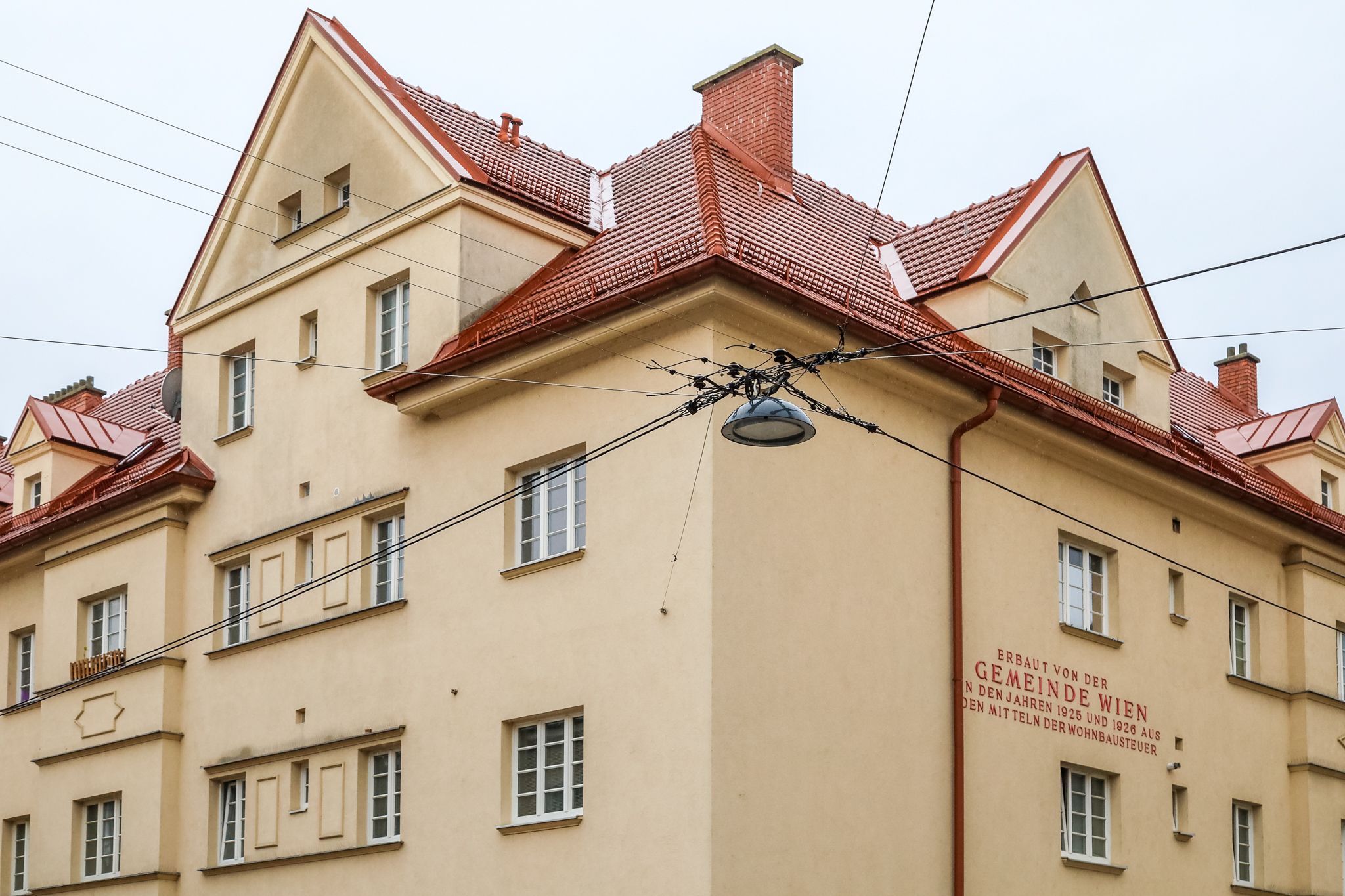
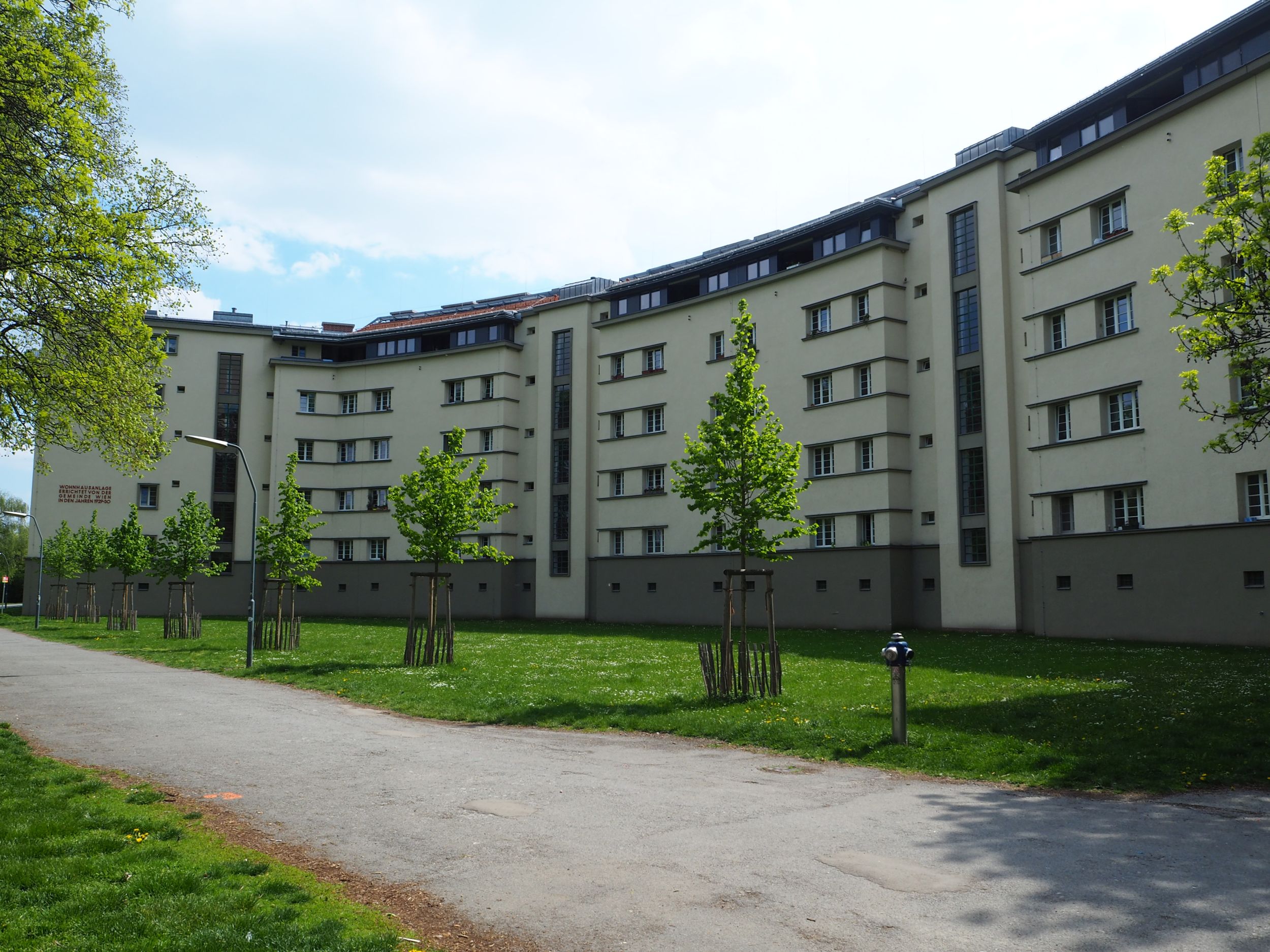
3/ In der Edergasse sehen wir, dass der rote Gemeindebau um die Ecke gezogen ist. Und dass auch der nächste Block nach der nächsten Quergasse (der Kantnergasse) bis zum Berzeliusplatz und darüber hinaus auch noch zu dem Gebäudekomplex gehört, der 1924-1925 als Gemeindebau errichtet wurde. Die Bauten östlich der Kantnergasse haben zwar keine rote Fassade mehr, aber andere Gestaltungselemente sind erkennbar gleich, beispielsweise die spitzen Giebel, Erker, Gesimse und Fensterumrahmungen. Geplant wurde der ganze Komplex von einem Architektenteam: Karl Julius Stoik, Konstantin Peller und Adolf Stöckl. Sie waren Schüler von Otto Wagner und haben noch zahlreiche andere Wohnhausanlagen der Gemeinde Wien geplant. Wir gehen weiter zum Berzeliusplatz und in die Justgasse.
4/ Der Berzeliusplatz und die Justgasse sind rechts begrenzt vom dritten Block des uns nun bereits bekannten Gemeindebaukomplexes. Links befindet sich ein bereits 1914 errichtetes Arbeiterwohnhaus der städtischen Gaswerke (Berzeliusplatz 2-7) geplant von den Architekten Hugo Mayer und Adolf Stöckl. Die große Ähnlichkeit der Bauten rechts und links der Justgasse erklärt sich durch die Beteiligung von Adolf Stöckl an beiden Planungen, tatsächlich liegt zwischen der Errichtung der linken und der rechten Seite 10 Jahre – und ein Weltkrieg.
5/ Wir gehen weiter Richtung Osten bis zur Carrogasse, in die wir nach rechts einbiegen. Hier verlassen wir die 1920er Jahre, denn der Bau auf der linken Straßenseite ist bereits in den 1950er Jahren errichtet – auch wenn das aufgrund der gelben Fassadenfarbe (wie bei den älteren Bauten) nicht gleich auffällt. Bei genauerer Betrachtung sehen wir aber, dass die Fassade und die Fenster sehr viel schlichter sind als auf der linken Straßenseite. Der Baublock ist auch nach Süden, zur Osergasse hin nicht abgeschlossen, die Baumassen sind viel lockerer verteilt als bei den kompakten Höfen der 1920er Jahre. In der Osergasse erreichen wir die eigentliche „Siedlung Siemensstraße“ aus den 1950er Jahren von Architekt Franz Schuster.
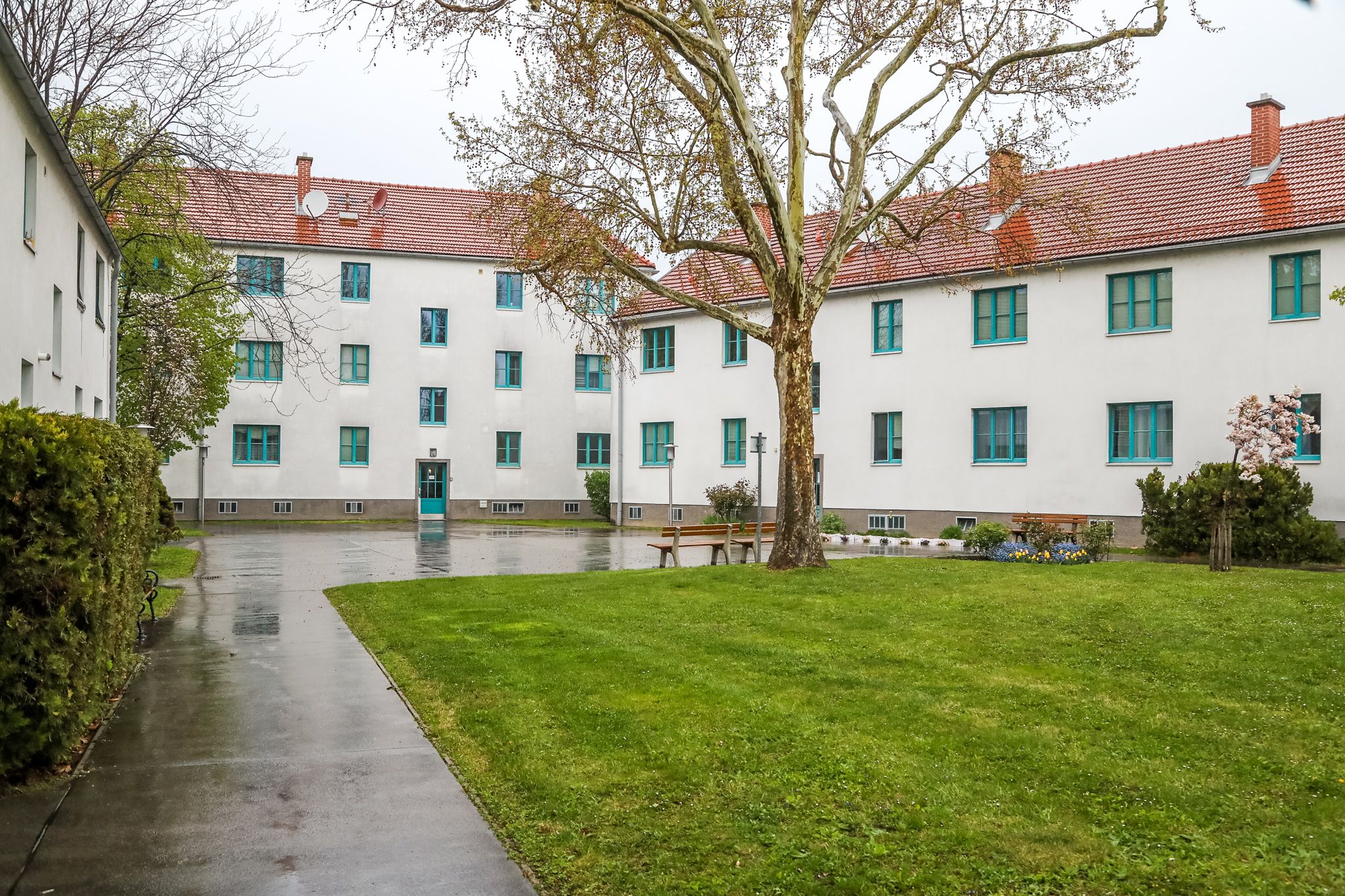
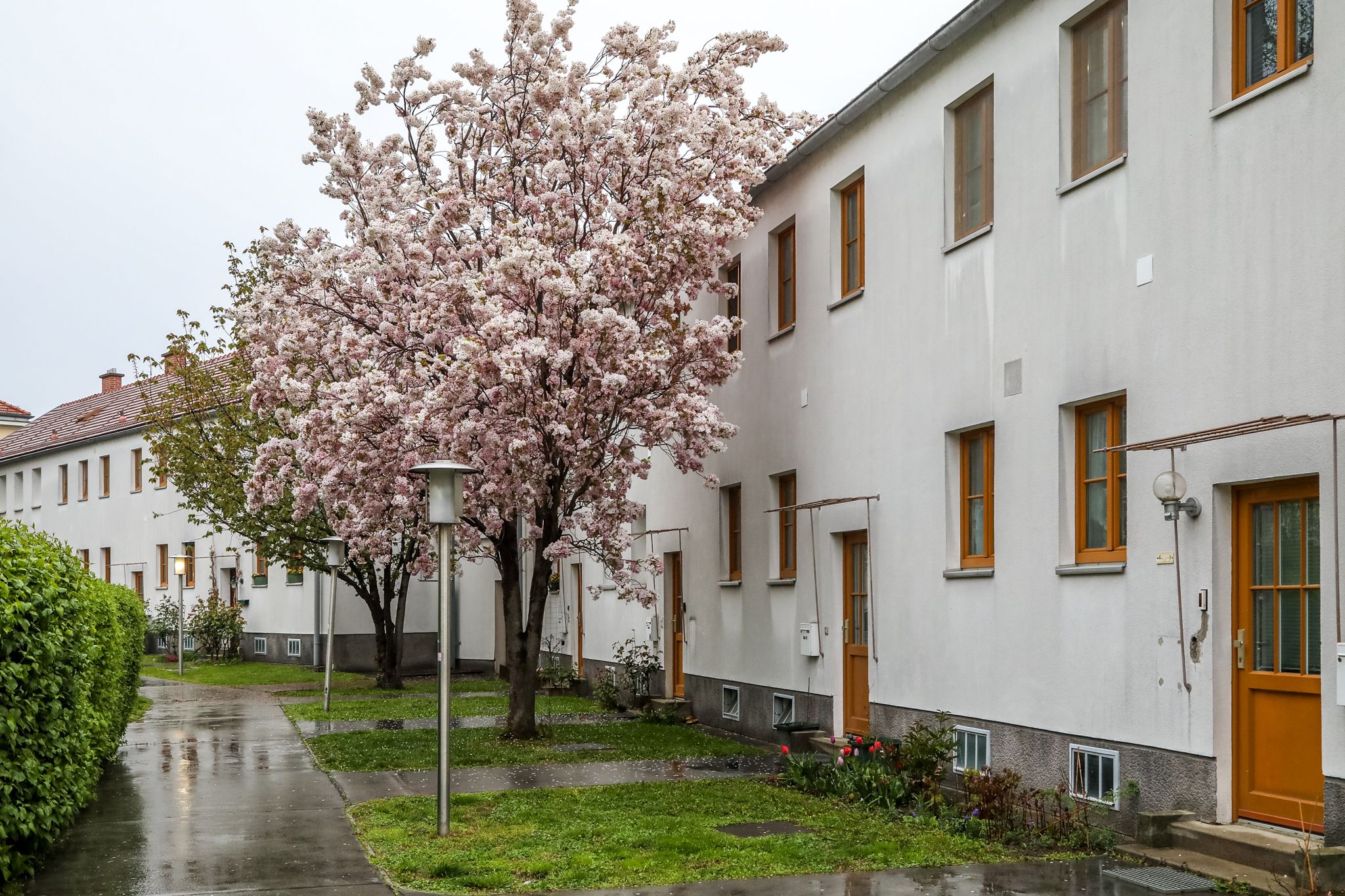
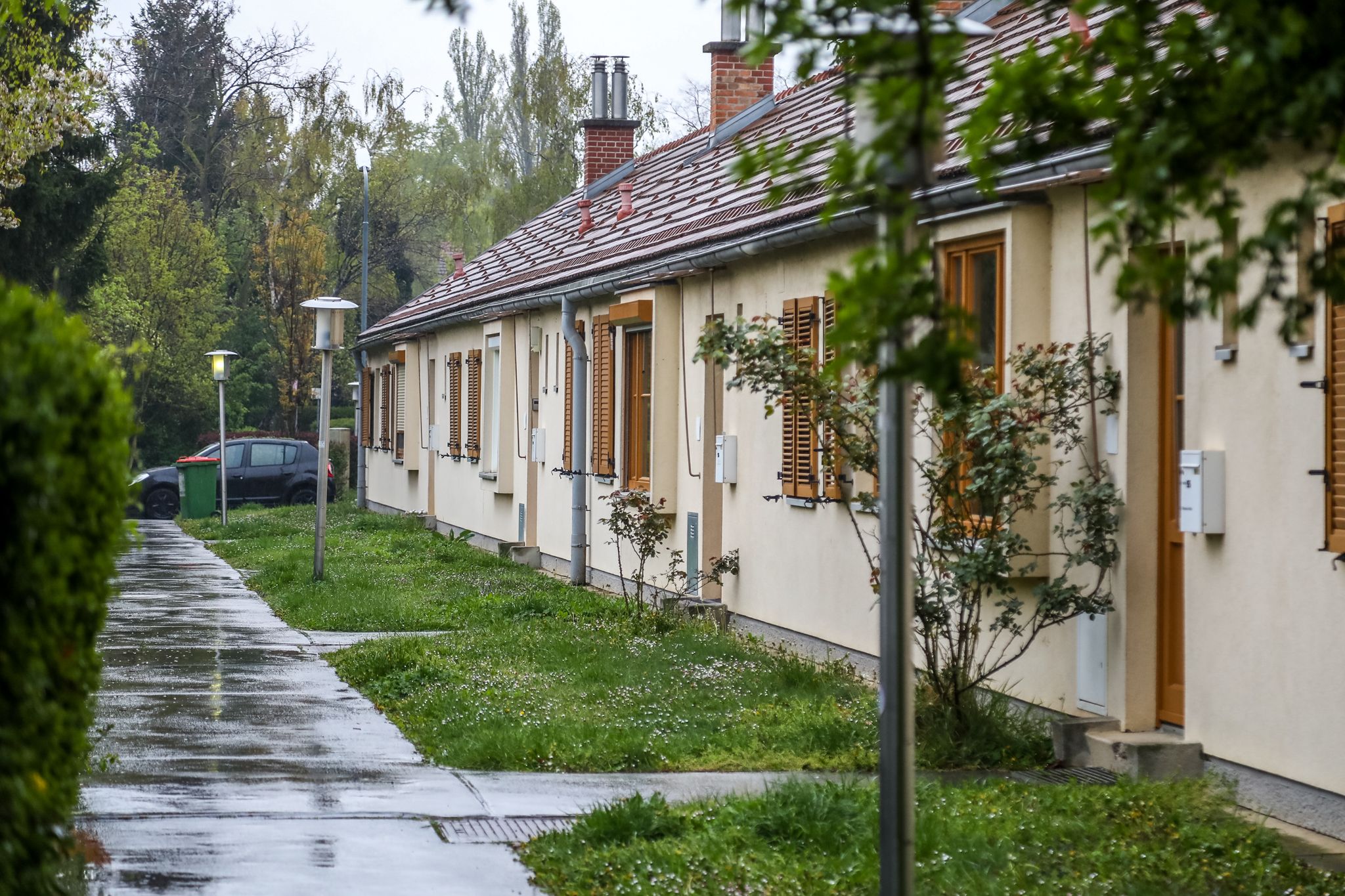
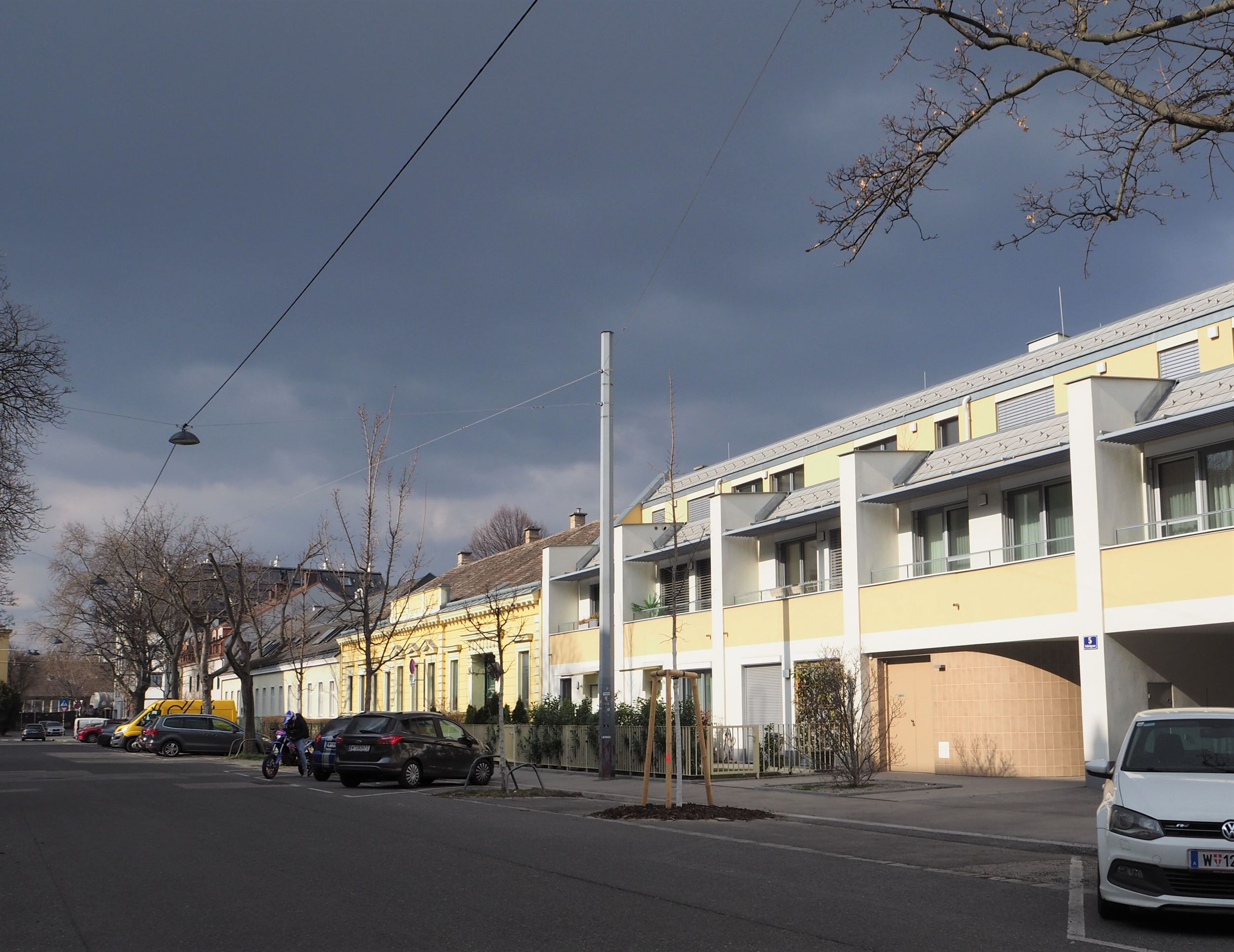
6/ Hier treffen wir zum ersten Mal auf die typischen zweigeschossigen Häuser der Siedlung Siemensstraße – mit den türkisen Fenstern, die sie bei einer Sanierung in den 1980er Jahren bekommen haben. In der Osergasse rechts stehen mehrere Zeilen Reihenhäuser. Hier sind die Wohnungen heute teilweise über zwei Geschosse angeordnet. In den 1950er wurden diese Wohnungen allerdings als sogenannte Duplex-Kleinwohnungen errichtet – sehr kleine Wohnungen auf je einer Etage, die später zusammengelegt werden konnten.
Die Osergasse ist sehr schmal – und obwohl hier Autos fahren können und auch parken, fühlt man sich als Fußgänger:in nicht unwohl. Man sieht in der Verlängerung der Osergasse, hinter dem Durchgang in den nächsten Hof auch bereits den Fußweg, der sich durch die ganze weitere Siedlung bis zur Ruthnergasse fortsetzen wird. Zwischen begrünten Höfen, den großen straßenbegleitenden Bäumen und den Reihenhausgärten glaubt man kaum, dass man nur drei Quergassen von der vierspurigen Brünner Straße entfernt ist.
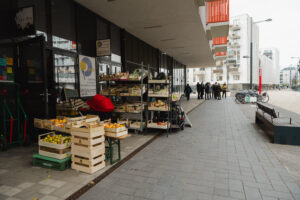
7/ Bevor wir ins Fußgänger:innenparadies der Innenhofschleichwege abtauchen, empfehle ich noch einen kleinen Abstecher ins „Minieinkaufszentrum“ der Siedlung. Vor dem Durchgang zum Fußweg biegen wir noch einmal rechts in die Skraupgasse ab – bis wir an einem Platz mit vielen kleinen Geschäften stehen. Ursprünglich als Nahversorger geplant, sind diese Geschäftslokale mittlerweile für Lebensmittelhandel zu klein. Aber es haben sich Pizzeria, Kebapstand und ein gut frequentiertes Wirtshaus angesiedelt – und auch die Trafik ist noch da. So muss man für kleinere Besorgungen oder ein schnelles Abendessen nicht den weiten Weg ins Shopping Center machen.
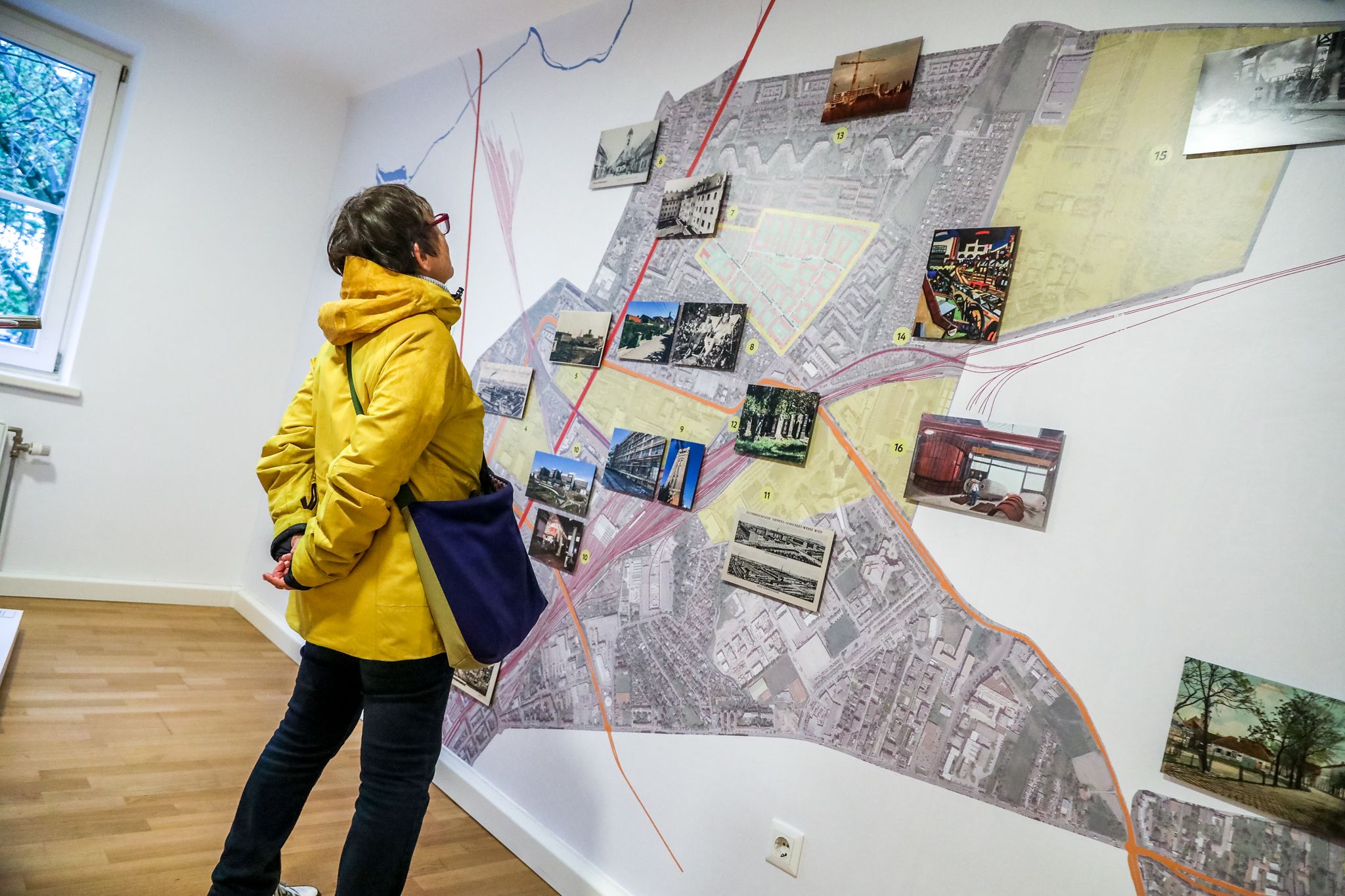
8/ Vorbei an Inges Imbiß führt uns der Weg in einen (autofreien) Innenhof. Hier ist eine sehenswerte Ausstellung untergebracht: „Terra Nova. 70 Jahre Siedlung Siemensstraße in Floridsdorf. Eine Ausstellung zum sozialen Wohn- und Städtebau in Wien nach 1945“. Die Ausstellung ist eine Kooperation von Wien Museum, wohnpartner team 21 und dem Referat Wohnbauforschung und internationale Beziehungen.
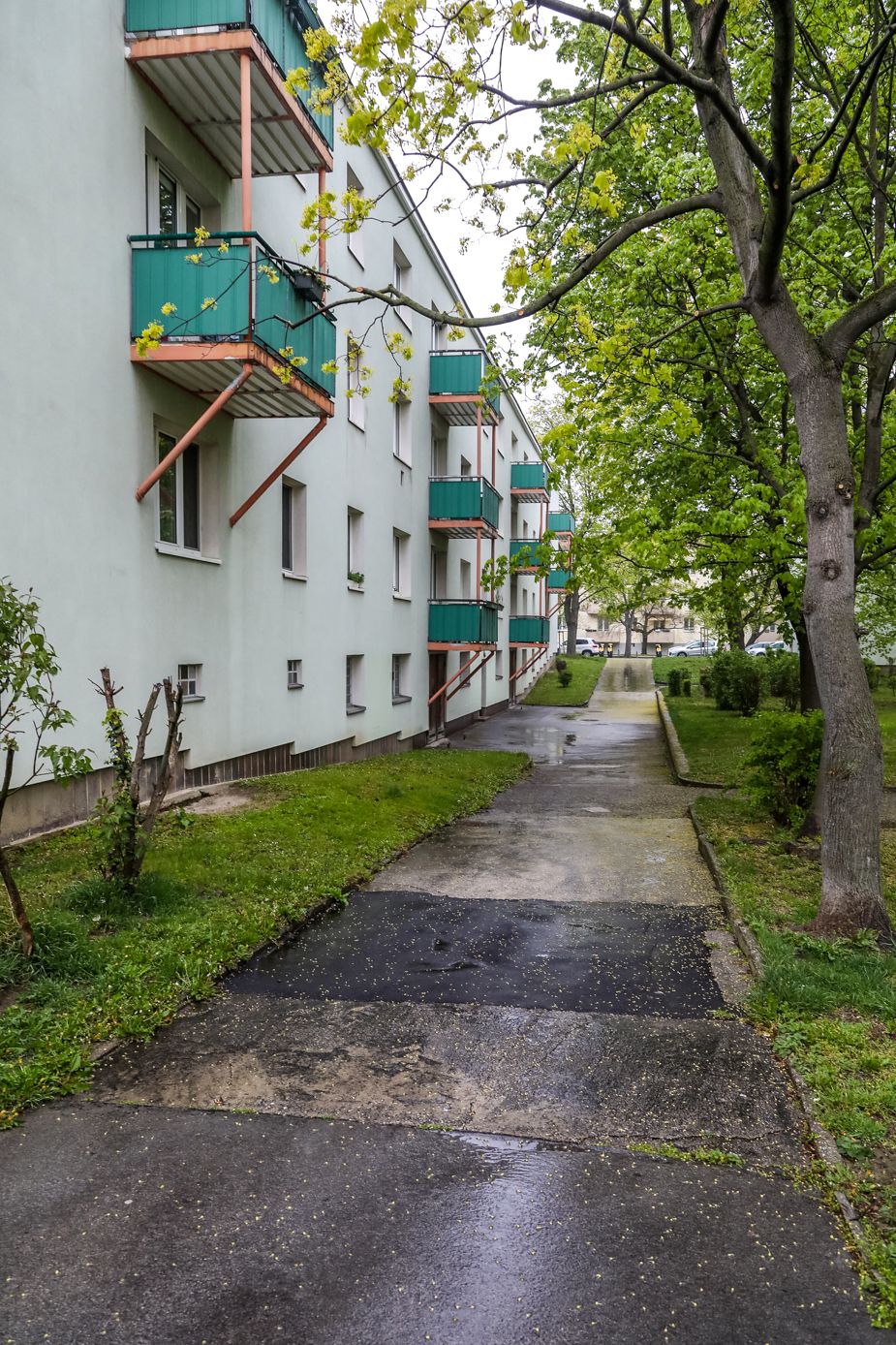
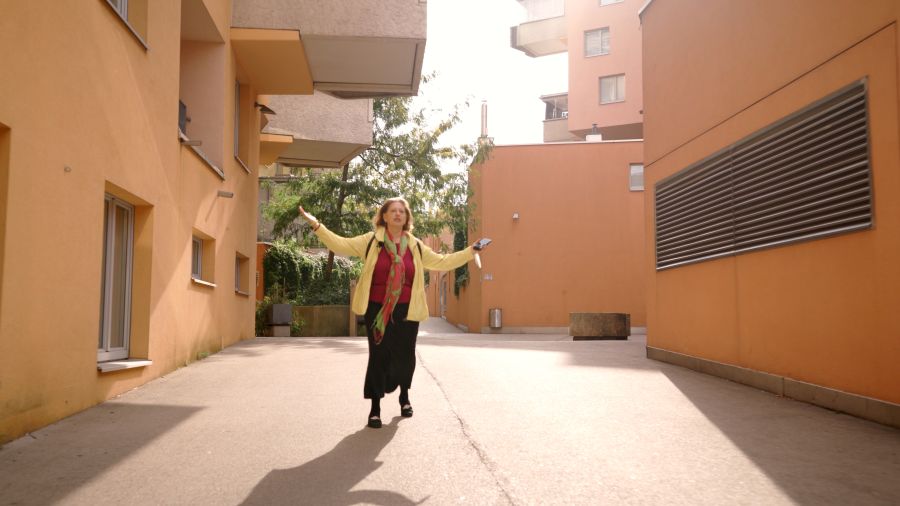
9/ Wir gehen auf der sehr idyllischen Fußwegverbindung zwischen den Höfen weiter nach Osten. Rechts vom Weg gibt es einige nur erdgeschossig ausgeführte Reihenhäuser, links begrünte Höfe mit Spielplätzen, Bänken und schattenspendenden Bäumen. Allerdings gibt es auch bereits erste dunkle Wolken im Paradies: drei der Gebäude links vom Fußgängerhighway schauen anders aus als die anderen – und die Höfe zwischen diesen Bauten sind nicht so einladend. Große asphaltierte Flächen, verwahrloste Grünanlagen – eindeutig werden diese Gebäude nicht von der selben Institution verwaltet, wir die freundlichen, schlichten Gebäude mit den türkisen Fenstern. Ist es nur Zufall, dass ausgerechnet die Gebäude mit den heruntergekommenen Innenhöfe Balkone haben?
10/ Wir verlassen den Fußgängerhighway und gehen durch einen der schönen Innenhöfe Richtung Scottgasse. Man sieht in den wärmeren Jahreszeiten fast immer Menschen auf den Bänken sitzen und plaudern. Die Höfe sind genutzt! Das liegt sicher auch daran, dass Fenster und Eingänge in den Höfe so organisiert sind, dass man sich fast zwangsläufig begegnet. Man kennt sich. Nie habe ich ein Hundstrümmerl auf den Wegen oder Wiesen gesehen. Das hinterlässt man nicht im Garten, in dem man demnächst wieder sitzen möchte.
Auf der Scottgasse kommen wir vorbei an Helgas Buffet, eines der gut besuchten kleinen Lokale. Hier könnte man im Sommer eine kleine Erfrischung zu sich nehmen. Direkt gegenüber befindet sich der Kindergarten, mit großer Freiflächen im Herzen der Siedlung.
11/ Nicht so gut besucht – und deshalb lange leerstehend, sind die Lokale auf den kleinen Platz an der Scottgasse. Bei meinem letzten Rundgang wurden die ehemaligen Keramik- und Blumengeschäfte gerade renoviert – vielleicht haben sie ja schon eine neue Nutzung gefunden?
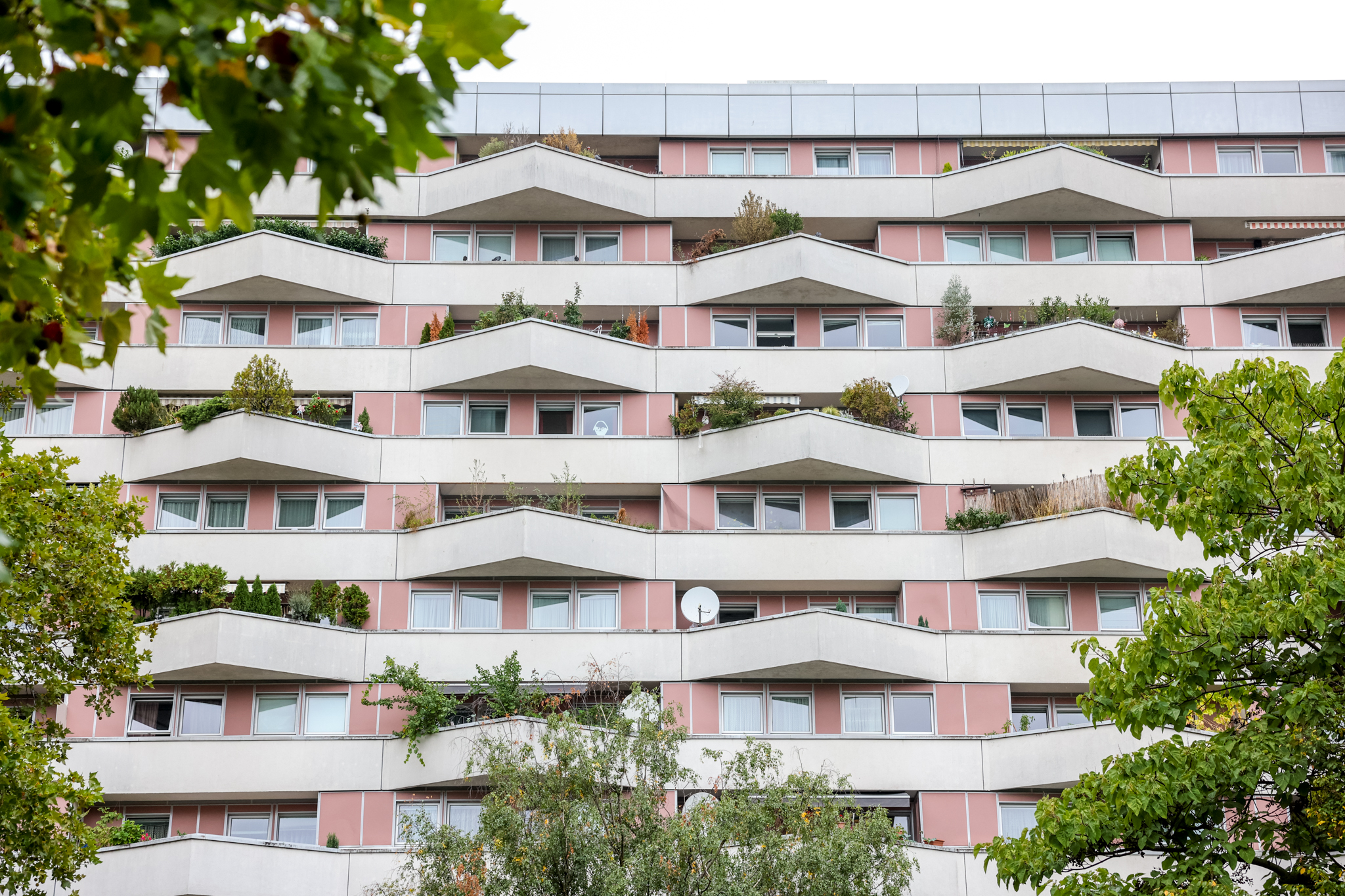
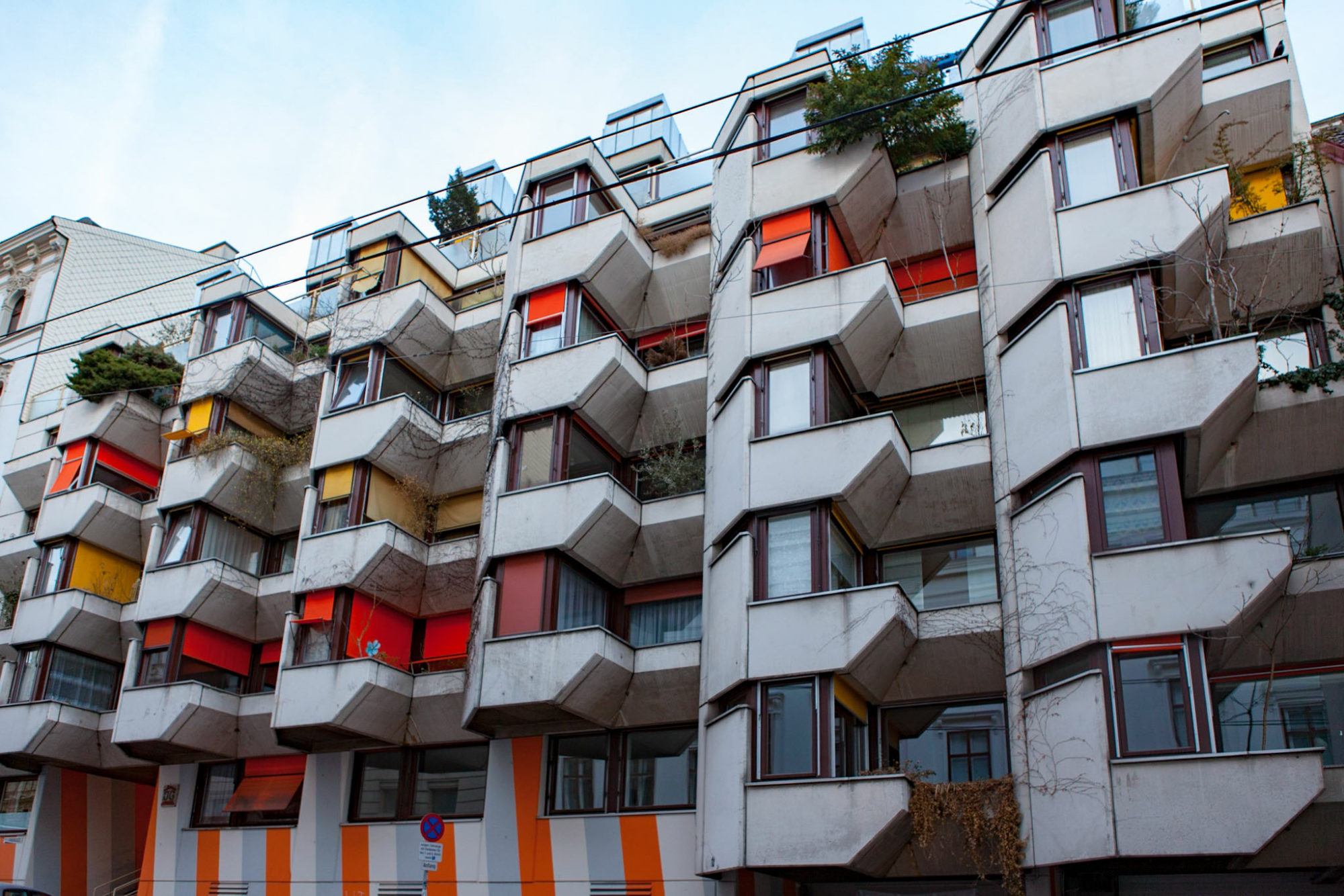
12/ Bei der Planung der Siedlung wurde auch ein eigener Bereich mit altersgerechten Wohnungen vorgesehen. Drei Gebäude in der Scottgasse 27 waren für ältere Siedlungsbewohner:innen reserviert. Die Wohnungen sind alle ebenerdig zugänglich und zu einem kleinen Hof gruppiert – ein Angebot an ältere Menschen in der Siedlung zu bleiben, wenn sie körperlich nicht mehr ganz fit waren. So waren sie in vertrauter Umgebung, aber doch so lange wie möglich selbstständig. Auch eventuell notwendige Betreuung kann leichter geleistet werden, wenn die Wohnungen nahe zueinander gelegen sind. Die Vergabe ausschließlich an ältere oder behinderte Menschen wird wohl heute nicht mehr (immer) so gelebt. Die Idee ist trotzdem großartig – und sollte vielleicht eine Wiederbelebung erfahren.
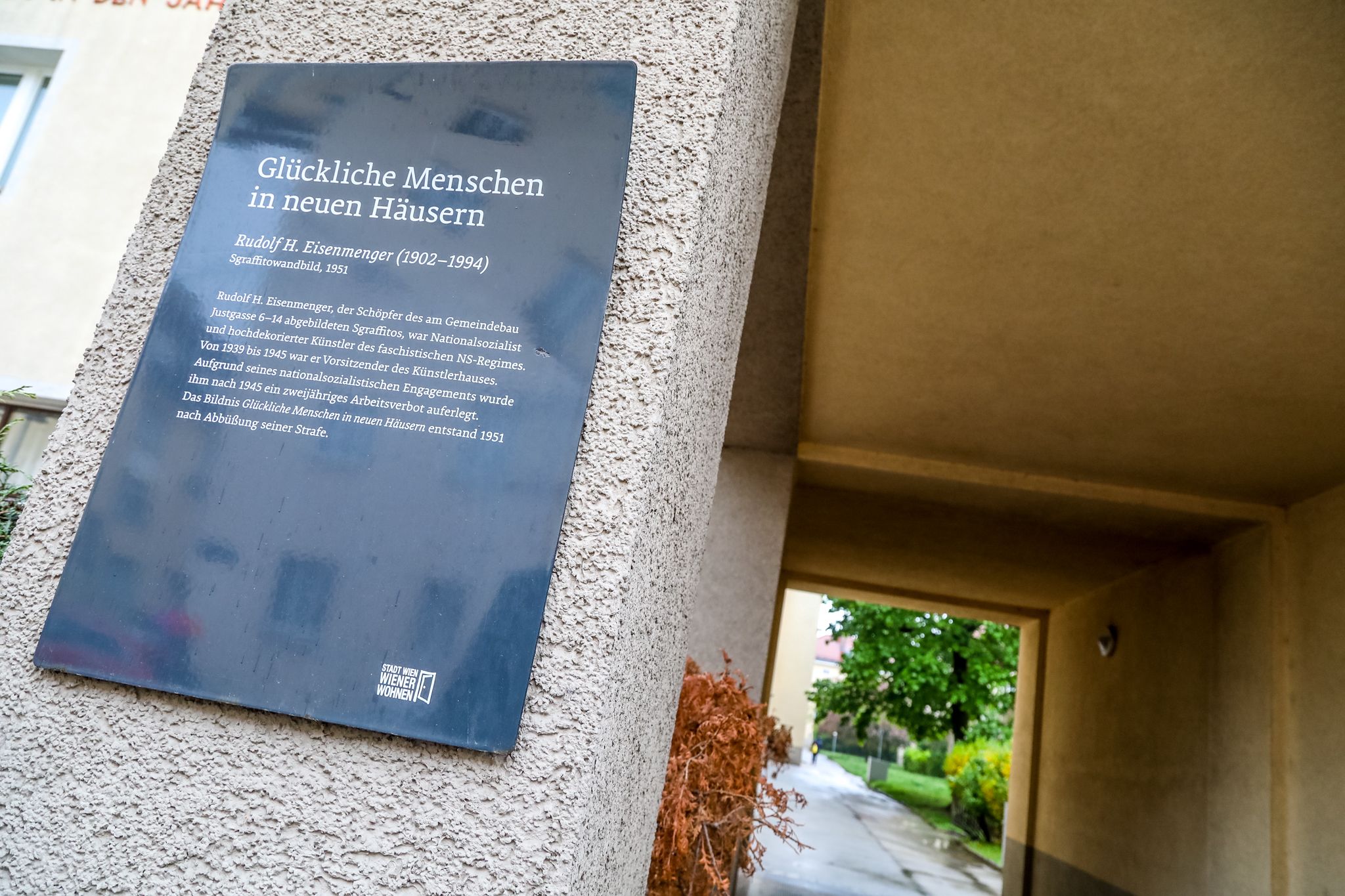
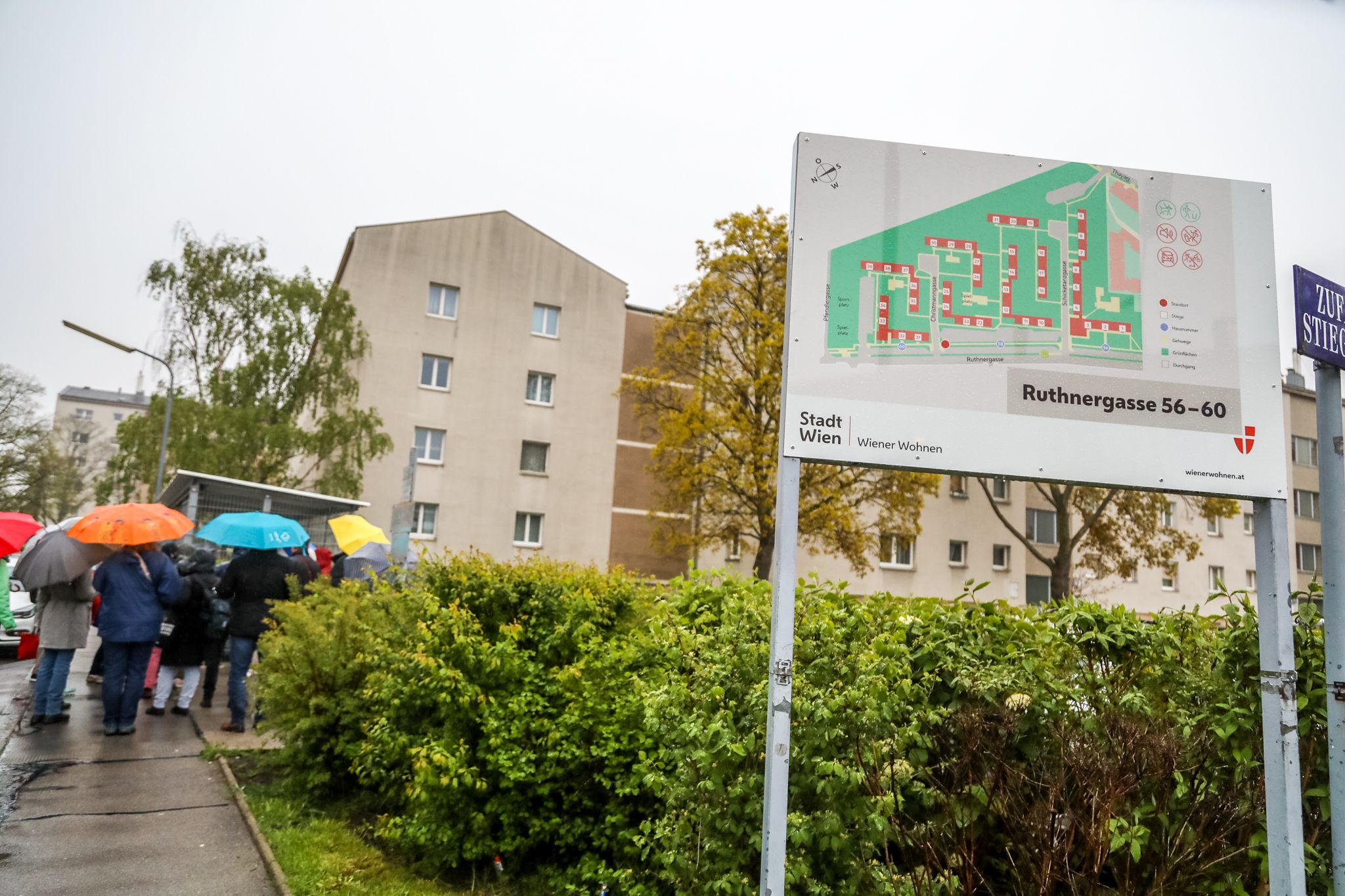
13/ Mit dem Ende der Scottgasse haben wir die ganze Siedlung Siemensstraße durchquert und sind an der östlichen Grenze des Planungs- und Baugebietes der 1950er Jahre angekommen, der Ruthnergasse. Die Wohnbauten auf der anderen Straßenseite sind später errichtet, die meisten 1969-1970. Man erkennt das daran, das sie höher sind. Während in der Siedlung Siemensstraße maximal 3 Geschosse inklusive Erdgeschoß gebaut wurden (und oft nur 2 Geschosse oder Reihenhäuser nur mit einem Erdgeschoß), sind es östlich der Ruthnergasse 4 bis 6 Geschosse. Die Bauten aus den 1970er Jahren haben alle einen großen Parkplatz für Autos zwischen der Straße und den Gebäuden. Und sie haben alle Balkone.
In der Anlage Ruthnergasse 56-60 gibt es auch ein paar Geschäfte. Das größte dieser Geschäfte ist lange Zeit leer gestanden, so dass ein paar engagierte Bewohner:innen Wiener Wohnen schließlich überzeugen konnte, ein Bewohner:innenzentrum als Treffpunkt einzurichten. Hier befindet sich seit einiger Zeit auch ein Stützpunkt der Wohnpartner.
14/ Wir gehen die Ruthnergasse entlang nach Norden – Richtung Justgasse. Zwischen den Häusern und der Straße gibt es viel asphaltierte Autoabstellplätze. In den 1950er Jahren war ein eigenes Auto noch ein seltener Luxus. Das hatte sich bis zur Errichtung der Wohnhausanlagen rechts von uns geändert. Nicht jede und jeder hatte ein Auto, aber viele Familien, die hier eine Wohnung bezogen haben. Es war genau wie andere Konsumgütern wie schöne Möbel, Fernseher und Waschmaschine ein Zeichen für Fortschritt und einen Wohlstand, den jede/r erreichen konnte.
Wenn man in die Höfe hineinschaut, fällt außerdem auf, dass sie eine andere, weniger intime Atmosphäre haben als in der 1950er-Jahre-Siedlung. Mehr Geschosse heißt auch mehr Menschen, die in die Höfe und Grünräume schauen. Es gibt kaum Bänke und die Wege scheinen ausschließlich die Parkplätze mit den Hauseingängen zu verbinden. Im Hof oder den Gartenanlagen muss sich auch niemand aufhalten – wer im Freien sein möchte, geht auf seinen privaten Balkon. Von dort aus kann man auf Bäume und Rasenflächen schauen – aber mit den Nachbarn unten sitzen ist nicht vorgesehen. Dort habe ich einige Hundstrümmerl auf dem Rasen gesehen. Warum auch nicht, es setzt sich ohnedies niemand daneben hin.
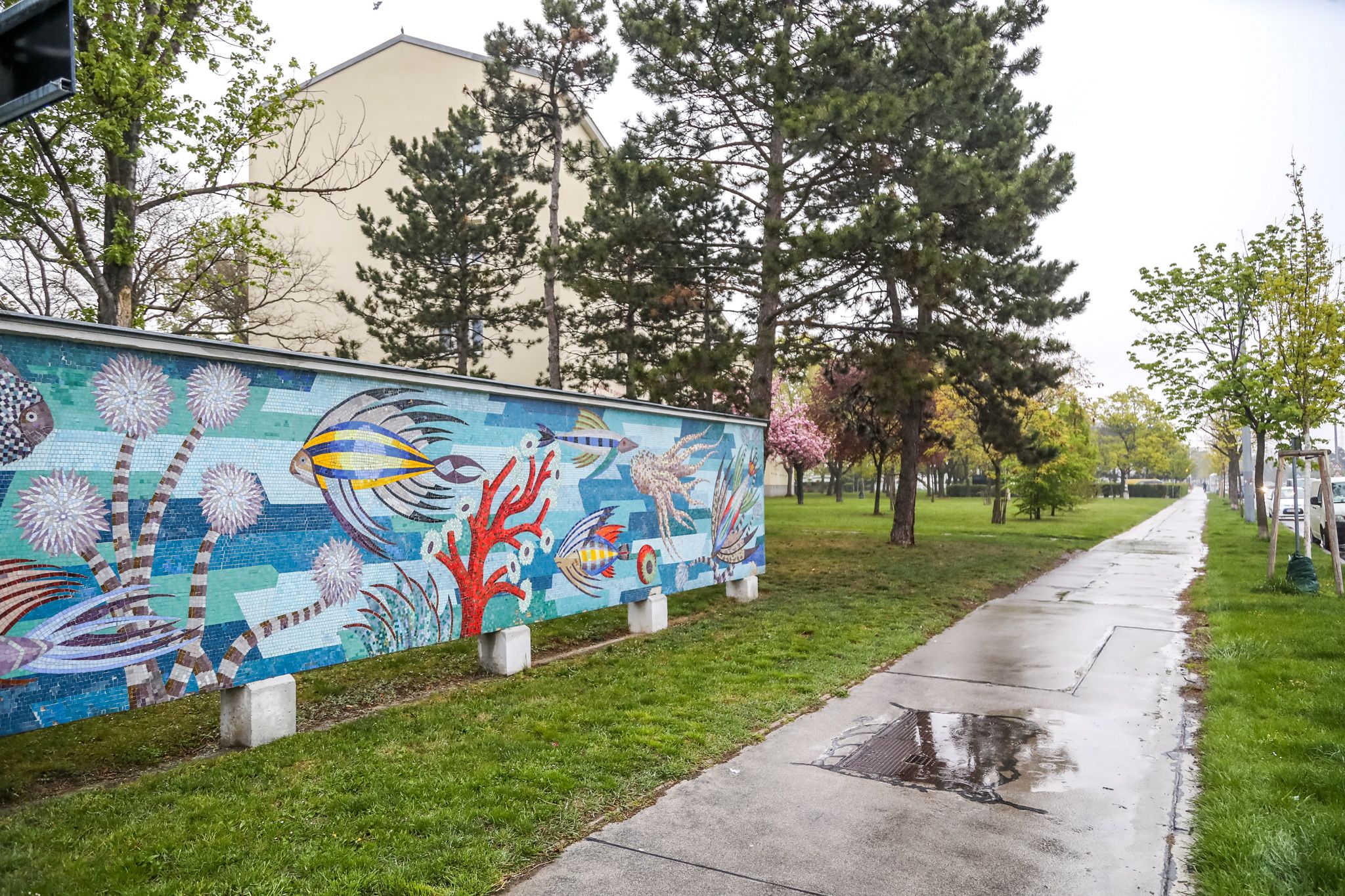
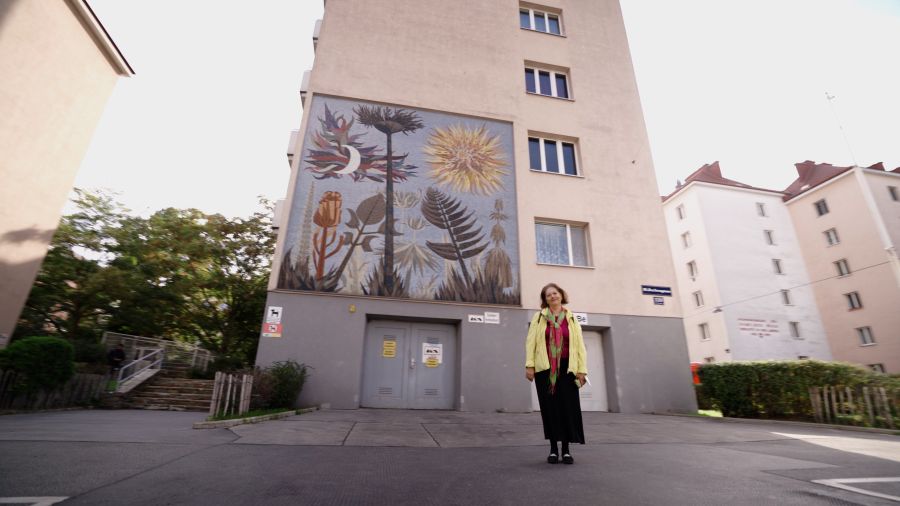
15/ Der Weg führt uns weiter zur Mosaik-Steinwand des Malers Anton Krejcar, die 1965 an dieser Stelle errichtet wurde. Anton Krejcar wird der „Wiener Schule des Phantastischen Realismus“ zugerechnet, die oft surrealen Sujets gemalt und dargestellt haben, beeinflusst von Traumvisionen, Mythen oder okkulten Lehren. Das Mosaik an der Ecke Ruthnergasse / Justgasse zeigt ein Unterwasserszenario mit bunten Fischen und Meereslebewesen.
Die vorrangig in den 1950er und 1960er Jahren in Wien wirkenden Künstler des phantastischen Realismus pflegten einen figurativen, surreal-manierierten Stil und die Ablehnung der (zu dieser Zeit sehr verbreiteten) Abstraktion. Die Kerngruppe der Wiener Schule bilden die Maler Erich (Arik) Brauer, Ernst Fuchs, Rudolf Hausner, Wolfgang Hutter und Anton Lehmden. Erweitert wurde die Bewegung durch Ludwig Schwarzer, Robert Ederer, Anton Krejcar, Franz Luby, Kurt Regschek und Helmut Heuberger.
Bei der Mosaikwand biegen wir in die Justgasse ein und treten nun den Rückweg an, wieder zurück in Richtung Brünner Straße.
Wer jetzt schon sehr müde ist hätte hier auch die Chance auf einen Bus zurück zum Ausgangspunkt zu warten. Alle Busse, die an der Station neben dem Mosaik halten, fahren zurück zur Volksschule Brünner Straße, von der aus der Rundgang gestartet ist.
16/ Die Justgasse ist eine der drei (relativ schmalen!) Straßen, die das Gebiet in Ost-West-Richtung erschließen. Alle drei sind Einbahnen und man merkt an der geringen Frequenz, mit der hier Autos fahren noch einmal, dass die ursprüngliche Siedlung errichtet wurde, noch bevor der Besitz und die Nutzung von Autos alltäglich war. Dass wenige Autos vorbei fahren – und selbstverständlich die wunderbare Grüngestaltung der meisten Höfe, Straßen und Wege – machen es besonders angenehm hier zu Fuß zu gehen.
Links in der Justgasse sehen wir noch die dreigeschossige Randbebauung der ursprünglichen Siedlung von Franz Schuster. Die Gebäude auf der rechten Seite gehören schon zu einer Erweiterung aus den 1960er Jahren (1964-66), also etwas früher errichtet als die Wohnbauten östlich der Ruthnergasse, die wir bei der vorletzten Station gesehen haben. Auch die Bauten jüngeren Datums sind Gemeindebauten – und sie bleiben an der Justgasse auch im Maßstab der Schuster-Siedlung: rechts und links sind die Gebäude dreigeschossig und relativ schlichte, einfache Bauten mit Satteldach und ohne weitere Gliederung der Fassade über die Fenster hinaus. Auch nördlich der Justgasse gibt es ein gutes Fußwegenetz, auf dem man unbehelligt vom Autoverkehr die Siedlung durchqueren kann.
Es gibt aber auch Unterschiede zwischen den beiden Siedlungsteilen. So gibt es beispielsweise vor den Bauten aus den 1960ern zwei große Parkplätze, die allerdings gut mit Bäumen und anderen Pflanzungen in die generell sehr grüne Freiraumgestaltung integriert ist. Wir biegen vor dem zweiten Parkplatz rechts auf einen Fußweg ab (beim Schild „Zugang zu den Stiegen 22-43 und 34-39″).
17/ Die meisten Baukörper der 1960er-Jahre-Erweiterung sind in Zeilenform angeordnet, das heißt sie bilden keine rechteckigen Höfe mehr aus, wie in den Bauteilen aus den 1920er und 1950er Jahren. Zwischen den Zeilen entstehen Flächen, die zwar begrünt sind – aber nicht mehr wie Höfe funktionieren. Ein kleiner, aber wichtiger Unterschied ist, dass die Hauseingänge nicht mehr in einem gemeinsamen Hof liegen – so treffen sich die Bewohner:innen der benachbarten Gebäude nicht mehr automatisch und kennen einender vielleicht überhaupt nicht. Wem „gehört“ dann der Zwischenraum zwischen den Gebäuden? Wer ist hier zuhause? Wer darf dort auf der Wiese sitzen (Bänke gibt es in diesen Zwischenräume gar keine)? Und wer will das überhaupt, wenn einem dort Menschen aus dem Nachbarhaus zuschauen, die man gar nicht kennt?
An manchen Stellen ist zwar zwischen den Gebäuden mehr Platz, dort gibt es dann Spielplätze und Bänke (und leider auch Müllinseln). Aber zwischen den meisten Häusern gibt es nur Zwischenräume. Man sieht dort nie jemanden sitzen oder spielen. Und es gibt Balkone. Wie in der Ruthnergasse scheinen die Rasenflächen, Bäume und Büsche mehr zum anschauen geeignet als zur Benutzung. Und anschauen kann man sie auch vom Fenster und Balkon aus. So trifft man aber leider niemanden mehr im Hof und kann mit den Nachbarn nicht mehr plaudern.
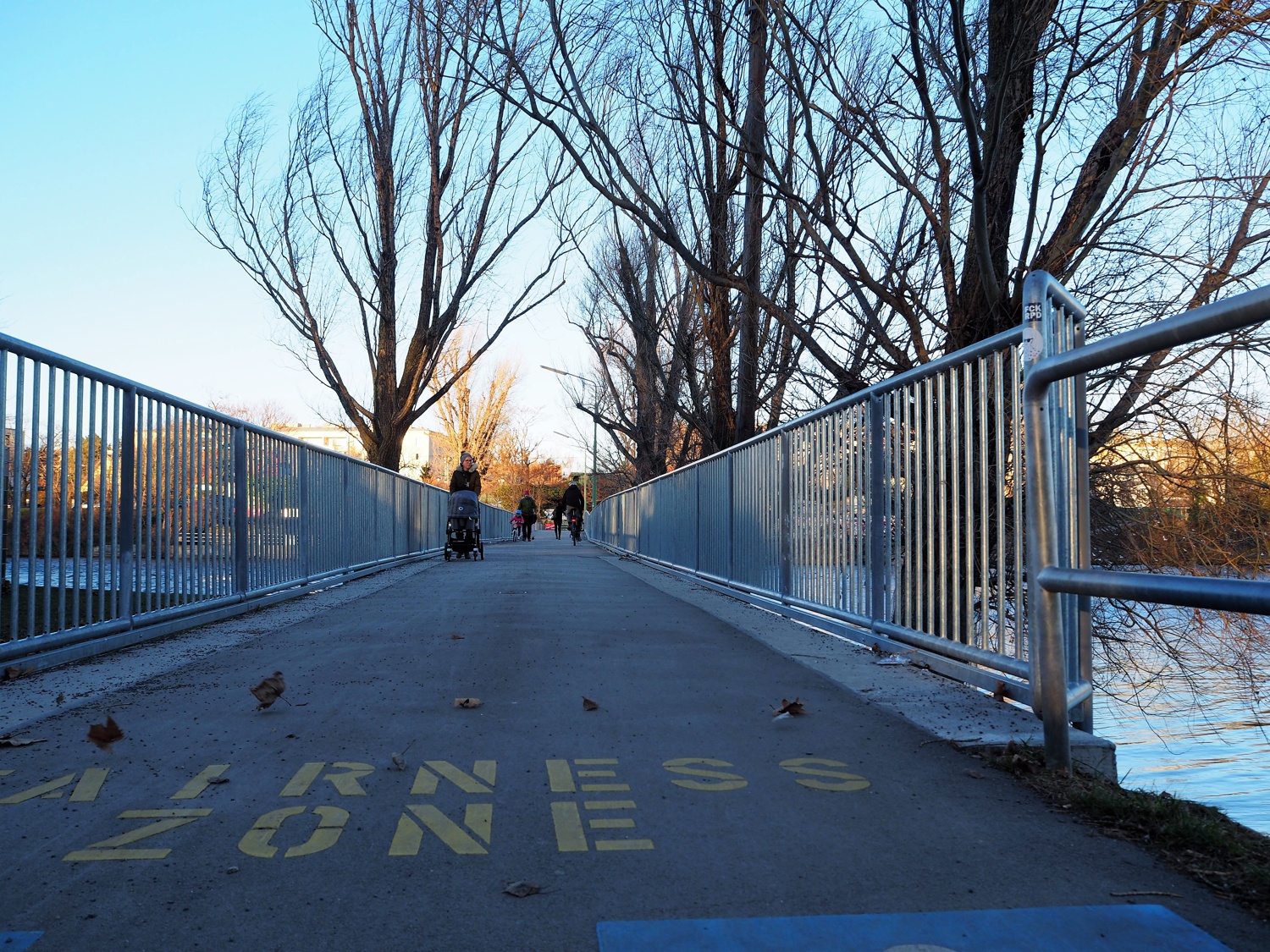
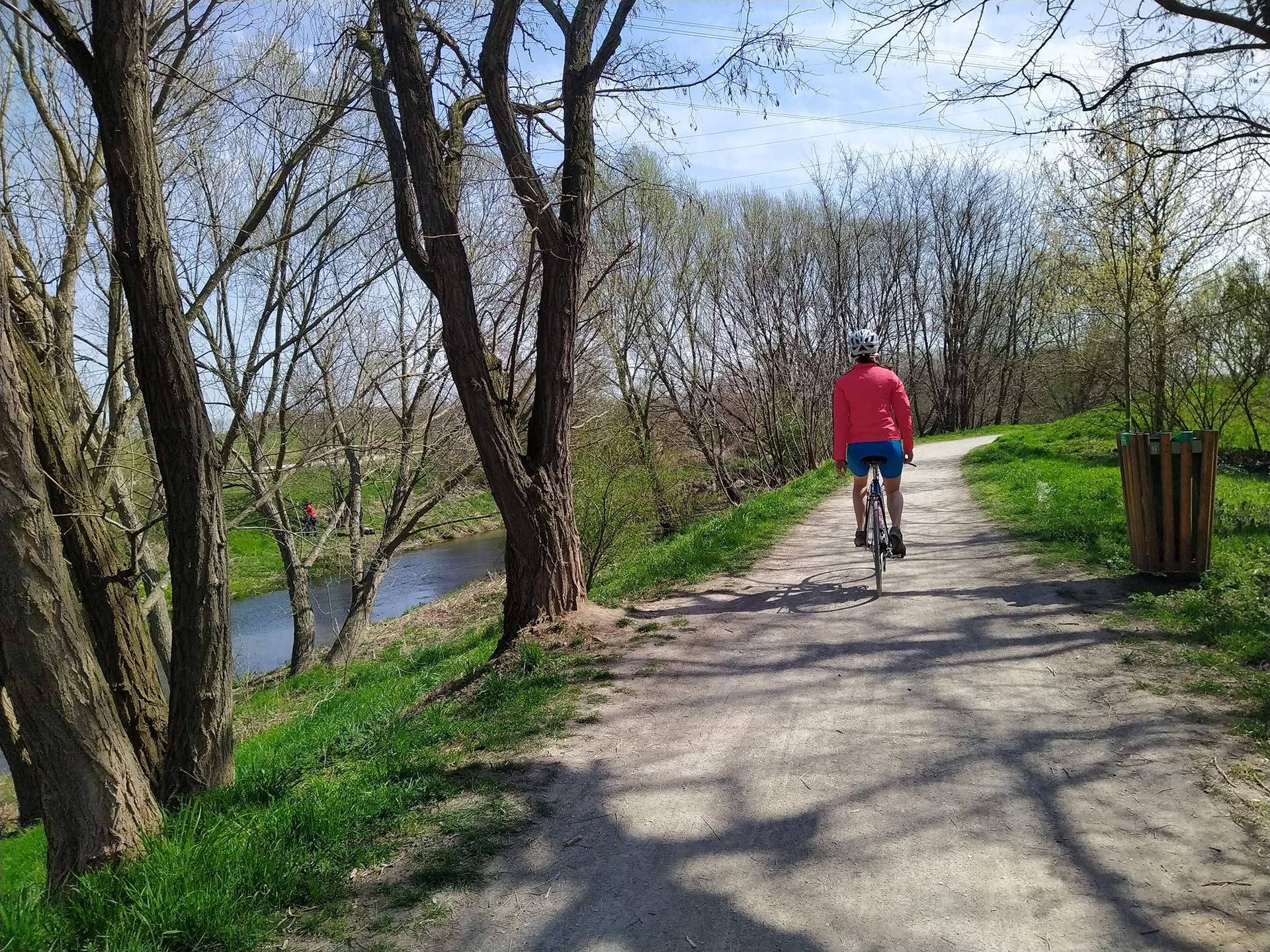
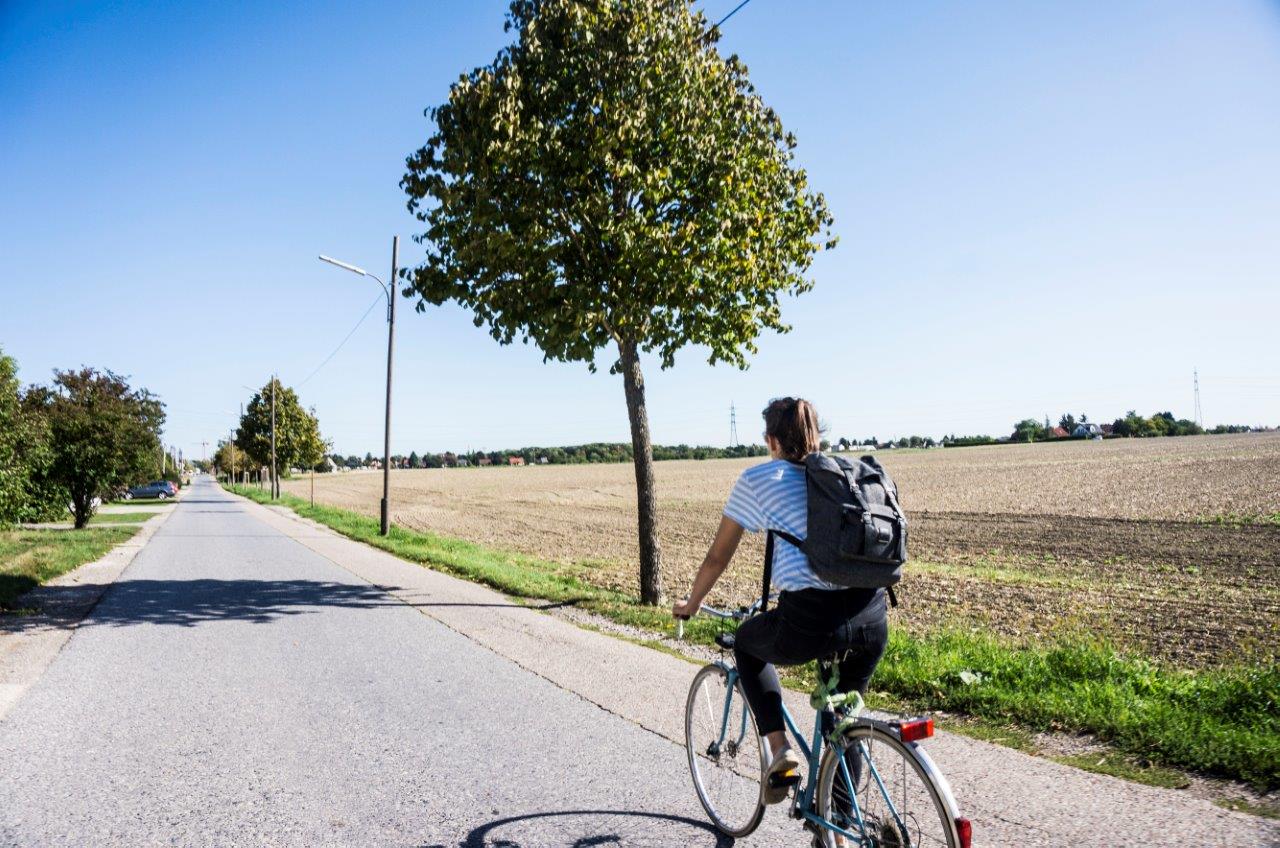
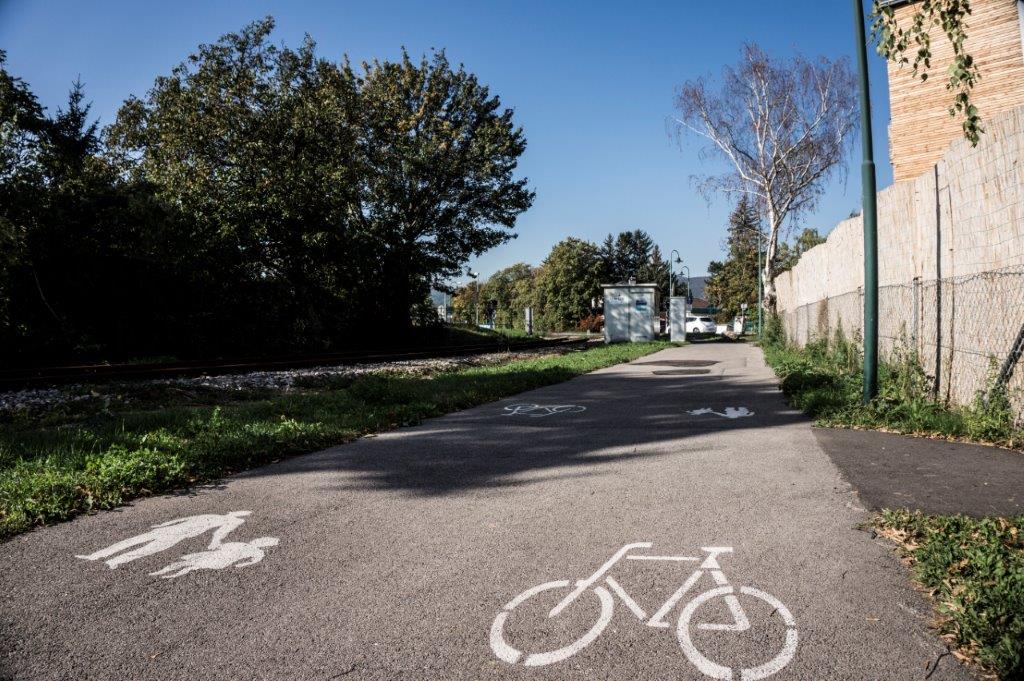
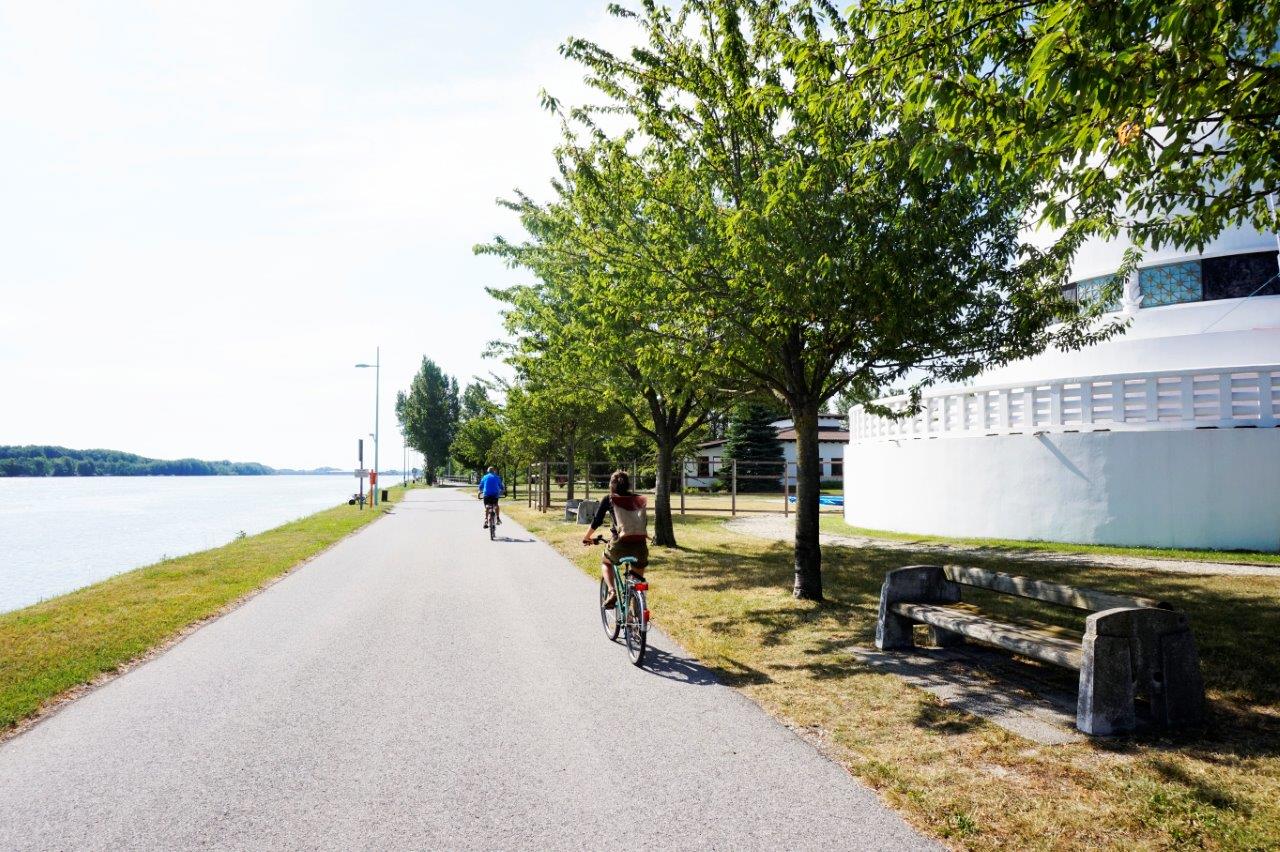
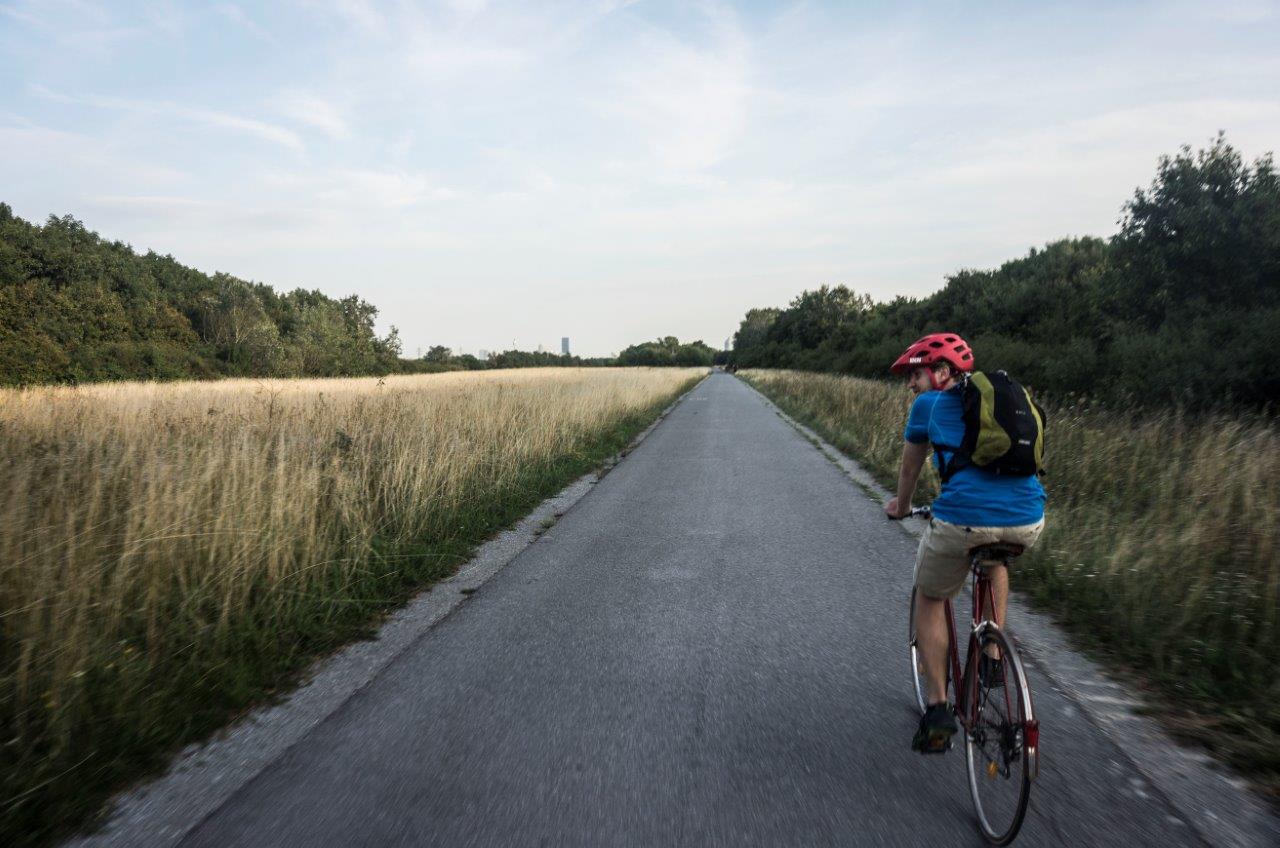
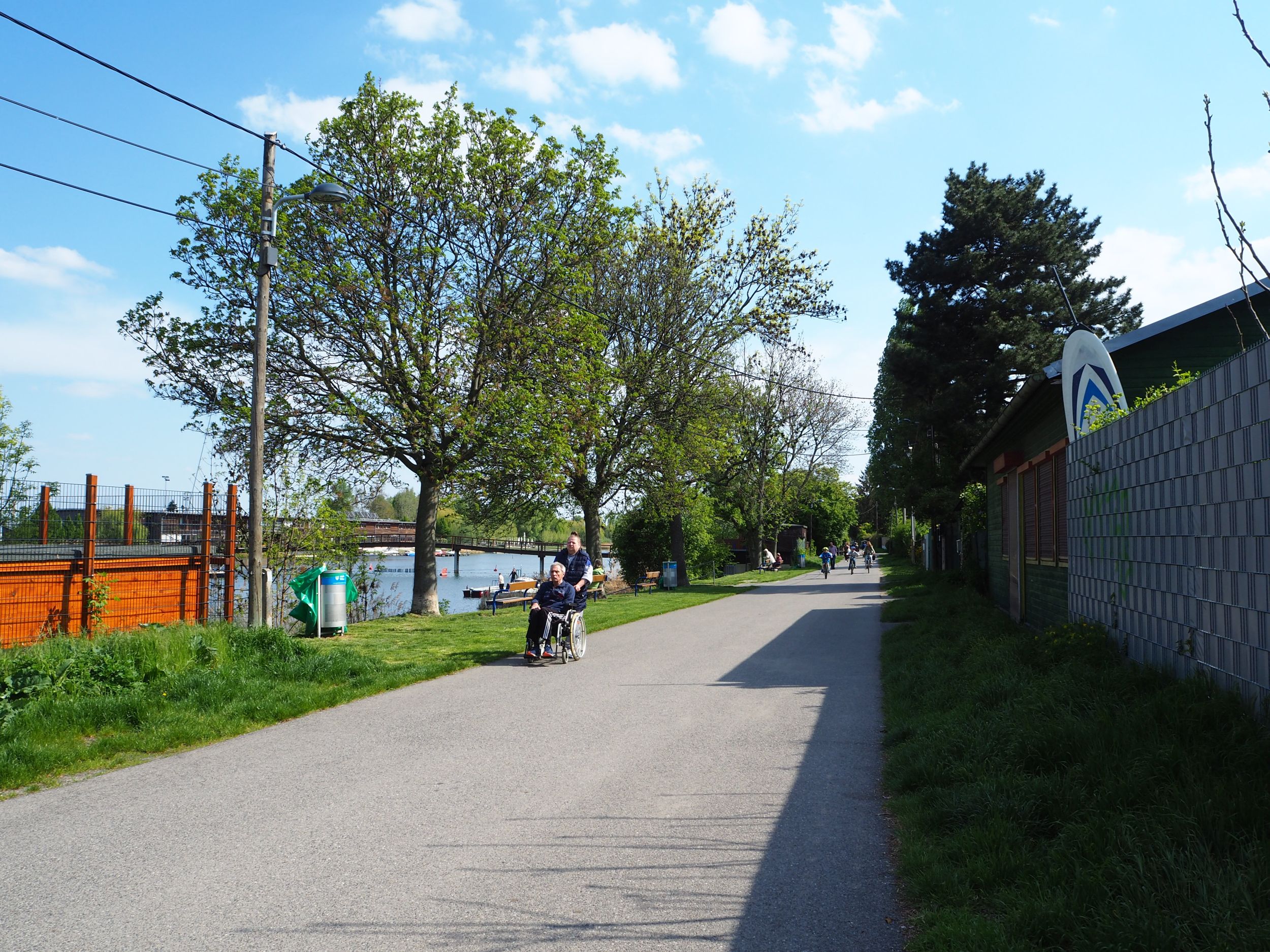
18/ Ein paar Meter weiter erreichen wir die Marco-Polo-Promenade – ein Fußgängerhighway, die so breit und super ist, dass hier sogar Radfahren möglich ist, ohne dass es zu Konflikten kommt. Diese autofreie, grüne Verbindung zwischen Brünner Straße und Ruthnergasse ist (fast ganz genau) einen Kilometer lang und rege genutzt. Da kann man fast zu jeder Tageszeit beobachten, dass die Menschen auch hier sehr gerne zu Fuß gehen, wenn es nur die geeigneten Wege dazu gibt!
19/ Nördlich der Marco-Polo-Promenade liegen die drei Bauteile des Heinz Nittel-Hofes. Der wurde 1979-1983 errichtet und vom Architekten Harry Glück geplant. Harry Glück ist auch der Planer des Wohnparks Alterlaa. Sein Credo war „Wohnen wie Reiche, auch für Arme“. Sein Markenzeichen waren (folgerichtig) Gemeinschaftspools, meistens auf dem Dach. Die gibt es auch auf dem Nittelhof, sie sollen laut Glück eine verbindende Funktion für die Bewohner:innen einnehmen, wie es früher das Wirtshaus oder der Kirchenplatz getan hat. Allerdings kann man sich fragen, ob das im Fall des Nittelhofes so gut funktioniert, denn der Kirchenplatz und andere Freiräume sind öffentlich zugänglich – die Schwimmbäder am Dach nur den Bewohner:innen des Hauses. Die großzügigen Freiflächen rund um den großen Baukomplex sind entweder abgezäunt – oder mit gestalterischen Mitteln wie dichter Bepflanzung und hohen Erdwällen von der öffentlichen Marco-Polo-Promenade abgeschirmt. So richtig einladend ist das nicht.
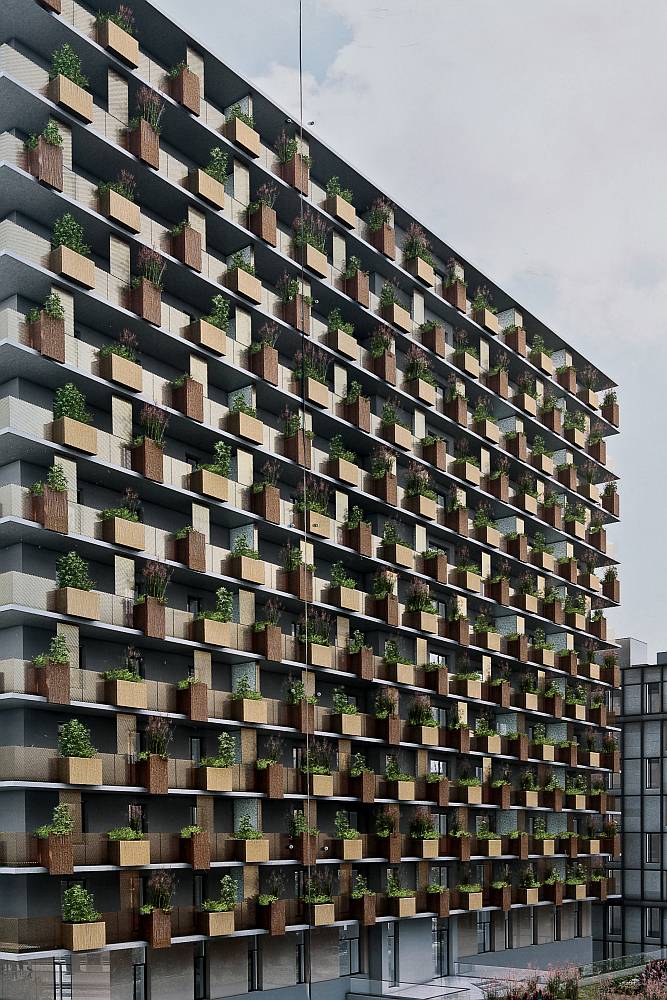
Balkone sind uns auf dem Rundgang bisher schon aufgefallen, weil sie immer dort auftauchen, wo die unmittelbare Umgebung der Wohnhäuser, die Höfe, Grün- und Freiflächen offensichtlich nicht (mehr) von den Bewohner:innen genutzt werden. Der Nittel-Hof scheint die logische Fortsetzung dieser Entwicklung zu sein, denn seine Fassade besteht nur noch aus Balkonen. Und die umgebenden Grün- und Freiflächen sind für Menschen die nicht dort wohnen nicht benutzbar. Die intimen Innenhöfe der 1950er Jahre waren eine Fortsetzung des öffentlichen Raumes, ein Treffpunkt für Nachbar:innen, die einander kannten. Dieser Raum ist sukzessive über die Jahrzehnte der Stadtplanung einem Verkehrsraum gewichen – für Autos zum Fahren und Parken, manchmal auch zum Zu-Fuß-Gehen. Aber Raum, um sich aufzuhalten und zu verweilen, ist in den jüngeren Planungen in der Öffentlichkeit nicht mehr vorgesehen.
20/ Wir folgen der Marco-Polo-Promenade Richtung Brünner Straße, bis wir die Skraupstraße erreichen, die hier als Sackgasse endet. Wenn noch Energie bei den Spazierenden vorhanden ist, lohnt sich noch einen Abstecher in den Hof in der zweiten Reihe der Promenade zu machen. Hier befinden sich zwei Gemeindebau-Höfe, die 1924-25 errichtet wurden, aber nach Norden hin offen geblieben sind. Vermutlich war geplant diese Höfe später mit einem ergänzenden Bau abzuschließen. Das ist dann in den 1960er Jahren tatsächlich passiert, indem jeweils ein Zeilenbau als Abschluss zur Promenade hin errichtet wurde. Dadurch sind wieder die typischen Innenhöfe entstanden, die wir aus älteren Beispielen bereits kennen.
21/ Der dritte unfertige Hof ist das Gebäude der Arbeiterwohnhausanlage der Gaswerke. Dieses Gebäude wurde nicht ergänzt. Stattdessen wurde zwischen den Stichstraßen der Berzeliusgasse und der Carrogasse ein Park angelegt. Die Lösung mit den Stichstraßen, die unabhängig von der fußläufigen Durchwegung funktioniert und Autoabstellmöglichkeiten mit vielen Bäumen und flächiger Durchgrünung verbindet, zeigt dass fußgänger:innenfreundliche Lösungen auch dort möglich sind, wo Autoverkehr im Wohngebiet zugelassen ist. Allein die Vermeidung von Durchzugsstraßen bzw. die Beschränkung auf wenige Zufahrtsmöglichkeiten, stellt sicher, dass nur Anrainer:innen in das Gebiet fahren. Und dass so ein sehr attraktives Gebiet zum Zu-Fuß-Gehen entsteht.
22/ Vom Park aus gehen wir durch das kleine Marco-Polo-Einkaufszentrum zur Brünner Straße – und über die Edergasse zurück zur Ampel Siemensstraße / Frauenstiftgasse. So haben wir unseren Ausgangspunkt wieder erreicht!
Die gesamte Tour mit den markierten Stopps gibt’s auch als Google Maps.
Ursula Hofbauer hofft, dass Sie Spaß an der Tour hatten, und freut sich über Anregungen, Korrekturen und Ergänzungen unter ursula.hofbauer@architektin.space
Alle Fotos: Christian Fürthner